MxW Connect - London 2026
A One-Day User Meeting for Scientific Discovery and Community Exchange in London.
Place
Zayed Centre for Research into Rare Disease in Children
UCL Great Ormond Street Institute of Child Health
20 Guilford Street London WC1N 1EH
Date
Time

Advances in Human In Vitro Models for Neurodevelopment and Neurodegeneration
Join us in London for a one-day user meeting highlighting advances in human in vitro models for neurodevelopment and neurodegeneration. The event will bring together researchers for scientific discussion, exchange, and networking around new insights and evolving approaches in the field.
Secure your spot by registering here!

Confirmed Speakers

Dr Madeline Lancaster is a Group Leader in the Cell Biology Division of the Medical Research Council (MRC) Laboratory of Molecular Biology, part of the Cambridge Biomedical Campus in Cambridge, UK. Madeline studied biochemistry at Occidental College, Los Angeles, USA, before completing a PhD in 2010 in biomedical sciences at the University of California, San Diego, USA. She then joined the Institute of Molecular Biotechnology of the Austrian Academy of Sciences (IMBA) in Vienna, Austria as a postdoctoral researcher in the Knoblich lab where she developed the first brain organoids, or cerebral organoids, before joining the LMB in 2015.

Professor Selina Wray is a Professor of Molecular Neuroscience in the Department of Neurodegenerative Disease, UCL Queen Square Institute of Neurology. Her work focussing on understanding the molecular mechanisms of Alzheimer’s disease and other forms of dementia using patient-derived stem cell models. Selina received her degree in Biochemistry and Biological Chemistry from the University of Nottingham in 2004 and was awarded her PhD in 2008 from Kings College London. She joined UCL Queen Square Institute of Neurology in 2009 as a postdoc with Professor John Hardy, supported by Alzheimer’s Research UK Junior and Senior fellowships, before establishing her own group.
Understanding clinical heterogeneity in Alzheimer’s disease and related dementias using personalised stem cell models
iPSC-based models provide a powerful platform to study the human biology of Alzheimer’s disease and related dementias. In this talk, I will present our work using iPSC systems to model familial Alzheimer’s disease (fAD), focusing on mutation-specific effects of APP and PSEN1 on Aβ generation and processing, and Familial British Dementia (FBD), focusing on cell type specific contributions to amyloid production. I will discuss how advanced in vitro systems can be used to capture and dissect the cellular, clinical and pathological heterogeneity that underpins these disorders. A particular focus will be placed on approaches to benchmark model fidelity against patient-derived tissues and biofluids, enabling more accurate representation of disease mechanisms and improving translational relevance. Together, these strategies aim to move preclinical modelling towards more predictive, human-relevant systems that can better inform therapeutic development.

I studied Medicine at the University of Birmingham (1991-97) and continued my general medical training in Oxford. I then spent three years working on the genetic linkage and association of neurological disorders at the Wellcome Trust Centre for Human Genetics. After obtaining my DPhil in 2003, I completed my training in Clinical Neurology at Oxford. I joined the Department of Physiology, Anatomy and Genetics in 2007 after being awarded an MRC Clinician Scientist Fellowship to establish my own research group. I then led IMI StemBANCC - an large public-private partnerhsip funded by the EU to establish iPSC resources for academia and industry across europe.
I now lead IMI IM2PACT which is an amibitious research programme to investigate disease mechanism involving the brain neurovascular unit and find transport mechanisms to get therapeutics into the brain.
My research group aims to develop resources and tools to improve drug discovery by leveraging human data and human iPSC brain models. We work on pain/migraine, Alzheimer's disease and autism/epilepsy.
I am also active clinically and work as a Consultant Neurologist at the John Radcliffe Hospital with an interest in Headache Disorders. I am Director of the Oxford Headache Centre and developed the Oxford Community Headache Service.
A matter of time - Modelling Tuberous Sclerosis Using Human Models
Tuberous sclerosis complex is a neurodevelopmental disorder in which disruption of TSC1 or TSC2 leads to cortical malformations, epilepsy and neurocognitive impairment. However, how loss of TSC gene function alters the earliest stages of human cortical development remains incompletely understood. In this talk, I will describe how we have used human pluripotent stem cell-derived neural models, including isogenic TSC2 loss-of-function systems and patient-derived iPSC lines, to investigate the developmental consequences of TSC pathway disruption.
I will discuss how culture conditions that are often treated as background variables can profoundly influence disease-relevant phenotypes, and how defining the timing of these effects provides insight into critical developmental windows. I will also present ongoing work extending these observations into patient-derived organoid and assembloid systems to explore how TSC1 and TSC2 mutations affect cortical patterning, dysplastic neuronal phenotypes and emerging neural circuit function.

Zoltán Molnár is Professor of Developmental Neuroscience at the University of Oxford. He is known for key contributions to our understanding of how the birth of cortical neurons is regulated, how they migrate, differentiate, generate axons and assemble into circuits, and how those circuits change over time, partly as a result of activity passing through them.
Molnár earned his M.D. at the Albert Szent-Györgyi Medical University, Szeged, Hungary and D.Phil. at the University of Oxford, UK. He also investigated thalamocortical development working at the Institut de Biologie Cellulaire et de Morphologie, Université de Lausanne, Switzerland, and learned optical recording techniques to understand early functional thalamocortical interactions at Kyoto Prefectural School of Medicine, Japan.
He was appointed to a University Lecturer position at the Department of Human Anatomy and Genetics at Oxford associated with an Official Fellowship and Tutorship at St John's College from 2000. He was awarded the title Professor of Developmental Neuroscience in 2007. Molnar has been Elected Member of Academia Europaea (Physiology and Neuroscience); European Neonatal Brain Club; Fellow of the Anatomical Society, Awarded New Fellow of the Year Award for 2018.
Attempts to Print Cortical Circuits
The human cerebral cortex is an essential part of the brain, yet how it develops is unclear due to methodological limitations. Studying cortical development requires accessible and naturalistic models in which lower-layer neurons project into subcortical targets, while upper-layer neurons form cortico-cortical connections. 3D organoids illuminate early cortical development, but so far lack layering. To address this gap, we differentiated hiPSCs into cortical neurons with distinct laminar fates. Early and late neuronal progenitor cells (ENPCs and LNPCs) were identified by layer-specific markers CTIP2 and SATB2. We then used a novel microfluidic system to generate 3D constructs of ENPCs and LNPCs that were assembled into one or two-layered structures. Using this model we observed inter-laminar structural and physiological connection development. Upon implantation into host mouse brains, 3D ENPC and LNPC projected axonal patterns corresponding to their laminar identities. ENPC implants preferentially targeted subcortical regions and white matter pathways, while LNPC implants exhibited intra- and inter-cortical projections. Finally, the implantation of two-layered neuronal tissues further advanced architectural reconstruction, with the ENPC compartment extending long-range connections and the LNPC compartment supporting local integration, thereby recapitulating the complementary projection patterns of deep- and upper-layer cortical neurons. Together, these findings demonstrate that whether a progenitor is early or late can influence the projection patterns and integration of implants into the host brain, and that spatially patterned cortical tissues can restore both local and long-range connectivity. Our study highlights the importance of constructing 3D neuronal tissues comprising predefined neuronal subtypes as a foundation for anatomically guided and personalised neural repair strategies following cortical injury.
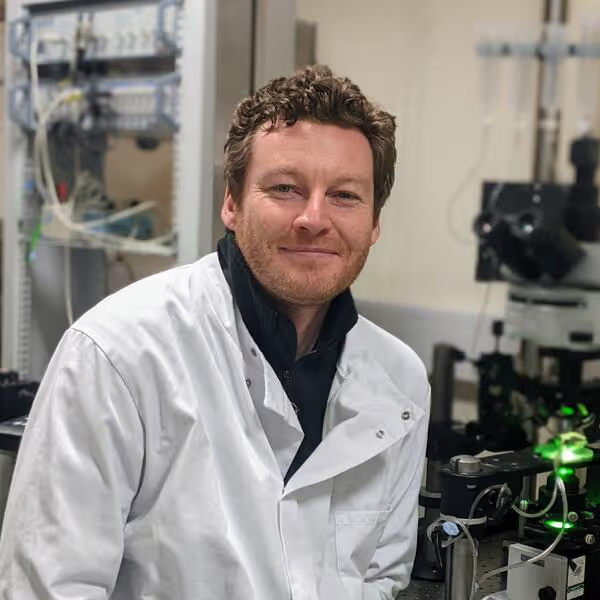
I studied Pharmacology (B.Sc. Hons) at the University of Edinburgh between 2001 – 2005. In 2005, I joined the Department of Neuroscience, University of Dundee, to undertake a BBSRC-Case PhD studentship. Here, using patch-clamp electrophysiology techniques, I examined the structure-function of pentameric ligand-gated ion channels. My time in Dundee included a short post-doctoral position (JBC, 2008 and JBC, 2011).
I joined the University of Edinburgh at the start of 2011 and undertook a postdoctoral position to examine the functional capabilities and developmental properties of pluripotent stem cell-derived cortical neurons (J.Neurosci, 2014; J.Physiol, 2014 and PLoS One, 2014). In this time I became interested in using this technology in order to model disease, specifically amyotrophic lateral sclerosis and frontotemporal dementia, and was awarded a Royal Society of Edinburgh Fellowship (2015) in order to investigate synaptic impairments in ALS-FTD (Nature Neuroscience, 2016; Nature Communications, 2018; J.Pathology, 2020; Molecular Neurodegeneration, 2021). Furthermore, noting the increasing appreciation of the roles of non-neuronal cell types in healthy neuronal health and disease, I have also explored the functional properties of oligodendrocytes-derived from ALS patients (Stem Cells, 2016) and also began to examine the heavily underexplored area of oligodendrocyte physiology (Glia, 2019; Journal of Neuroscience, 2021).
In March 2020, I arrived at SITraN as a principle investigator to lead work on neurophysiological perturbations and their mechanistic bases in ALS-FTD.
Ion channel dysfunction in Motor Neurone Disease
ALS/FTD represents a clinically and biologically complex neurodegenerative disease spectrum in which the mechanisms driving selective neuronal vulnerability and disease progression remain poorly understood, limiting the development of effective therapies. In his talk, Dr Matt Livesey, Senior Lecturer at the Sheffield Institute for Translational Neurosciences (SITraN), University of Sheffield, will discuss how advanced human induced pluripotent stem cell (iPSC) models and electrophysiological approaches can be used to investigate neurophysiological dysfunction in ALS/FTD at the synaptic, cellular, and ion channel levels. His latest research combines patient-stratified in vitro human neuronal and glial models to better understand disease-associated dysfunction, uncover the cellular mechanisms underlying neurodegeneration, and identify potential therapeutic targets.

I graduated from medical school at the Georg-August-University Göttingen in Germany with both a medical degree and a research MD (summa cum laude and prize for the best thesis of the year). My MD project with Paul Lingor investigated the role of the autophagic protein ULK1 in axonal degeneration and regeneration. I subsequently completed an MSc in Neuroscience and a DPhil in Clinical Neurosciences at the Oxford Motor Neuron Disease Centre with Kevin Talbot and Martin Turner, focusing on the role of microglia in ALS. During my DPhil I was Clarendon Scholar and held additional scholarships from St John’s College, the MRC, and NIHR. After three years as a Postdoctoral Researcher in the Talbot Lab, I am now an independent Research Fellow, funded by an MNDA Lady Edith Wolfson Fellowship. I am also Junior Research Fellow at Kellogg College, having previously served as Fulford Junior Research Fellow at Somerville College.
Dissecting the role of microglia in amyotrophic lateral sclerosis using multicellular hiPSC models
Neuroinflammation is increasingly recognised as a key contributor to amyotrophic lateral sclerosis (ALS) and frontotemporal dementia (FTD), two diseases with overlapping clinical, genetic, and pathological mechanisms. In particular, microglia are thought to play a central role in ALS/FTD pathophysiology. However, the mechanisms by which ALS/FTD-associated mutations alter human microglial function and influence neuronal health remain incompletely understood. To address this, we developed a human induced pluripotent stem cell (iPSC)-derived co-culture model to investigate interactions between motor neurons and microglia in a human disease-relevant system. Using this platform, our work explores neuron–microglia crosstalk in C9orf72-ALS/FTD. We previously demonstrated that C9orf72-ALS/FTD microglia adopt a pro-inflammatory and neurotoxic phenotype and induce motor neuron degeneration through non-cell-autonomous mechanisms. More recent work further suggests alterations in pathways linked to synaptic homeostasis and innate immune signalling in C9orf72-ALS/FTD co-cultures, supporting a broader role for dysfunctional microglia in disease-associated neurodegeneration. Together, our findings establish human iPSC-derived motor neuron–microglia co-cultures as a powerful platform to dissect neuroimmune mechanisms in ALS/FTD and identify potential therapeutic targets.
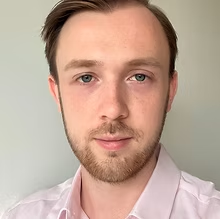
Thomas received his Integrated Master’s degree in Neuroscience from King’s College London, United Kingdom in 2023, where he completed a project investigating lipid dysregulation during ageing in human neural stem cells in the laboratory of Professor Sandrine Thuret. After this, he worked as a Research Assistant in the group of Marc-David Ruepp (King’s College London) exploring the cellular cold-shock response and it’s potential in the treatment of amyotrophic lateral sclerosis.
Thomas joined the Pluchino lab in January 2025 as a PhD student funded by the Doctoral Training Program in Medical Research (School of Clinical Medicine, University of Cambridge). Utilising brain organoids, he will be investigating the interplay between senescent neural stem cells present in MS and healthy brain cells, supervised by Alex Nicaise.
New Approach Methodologies for MS Research
Progressive multiple sclerosis (pMS) remains a major unmet clinical need, with smouldering neuroinflammation and neurodegeneration driven by complex CNS-intrinsic mechanisms that traditional animal models fail to recapitulate adequately. New approach methodologies (NAMs) leveraging human patient-derived systems offer a transformative opportunity to study these processes with unprecedented fidelity. Our laboratory has developed a progressive NAM framework, moving from patient-derived 2D induced neural stem cell (iNSC) cultures — generated via direct reprogramming to preserve disease-relevant epigenetic memory — towards sophisticated 3D patient hybridoid models. These novel human hybridoids are built on developmentally mature air-liquid interface cortical organoids (ALICOs) transplanted with control or patient-derived iNSCs, enabling the study of neuroimmune interactions within a structured, physiologically relevant architecture.
To comprehensively phenotype and interrogate these models, we apply an integrated multi-module analytical strategy encompassing spatial transcriptomics to resolve disease-associated cellular states in their tissue context, multielectrode array (MEA) recordings to capture functional network dynamics, and RABIDseq to map intercellular communication at single-cell resolution. Together, this NAM pipeline — spanning patient-specific 2D cultures through to functionally and molecularly profiled 3D hybridoids — represents a powerful new platform for dissecting pMS pathogenesis and identifying novel therapeutic targets.