Community Voice
Perspectives from the neuroscience community shaping the future of research and discovery.
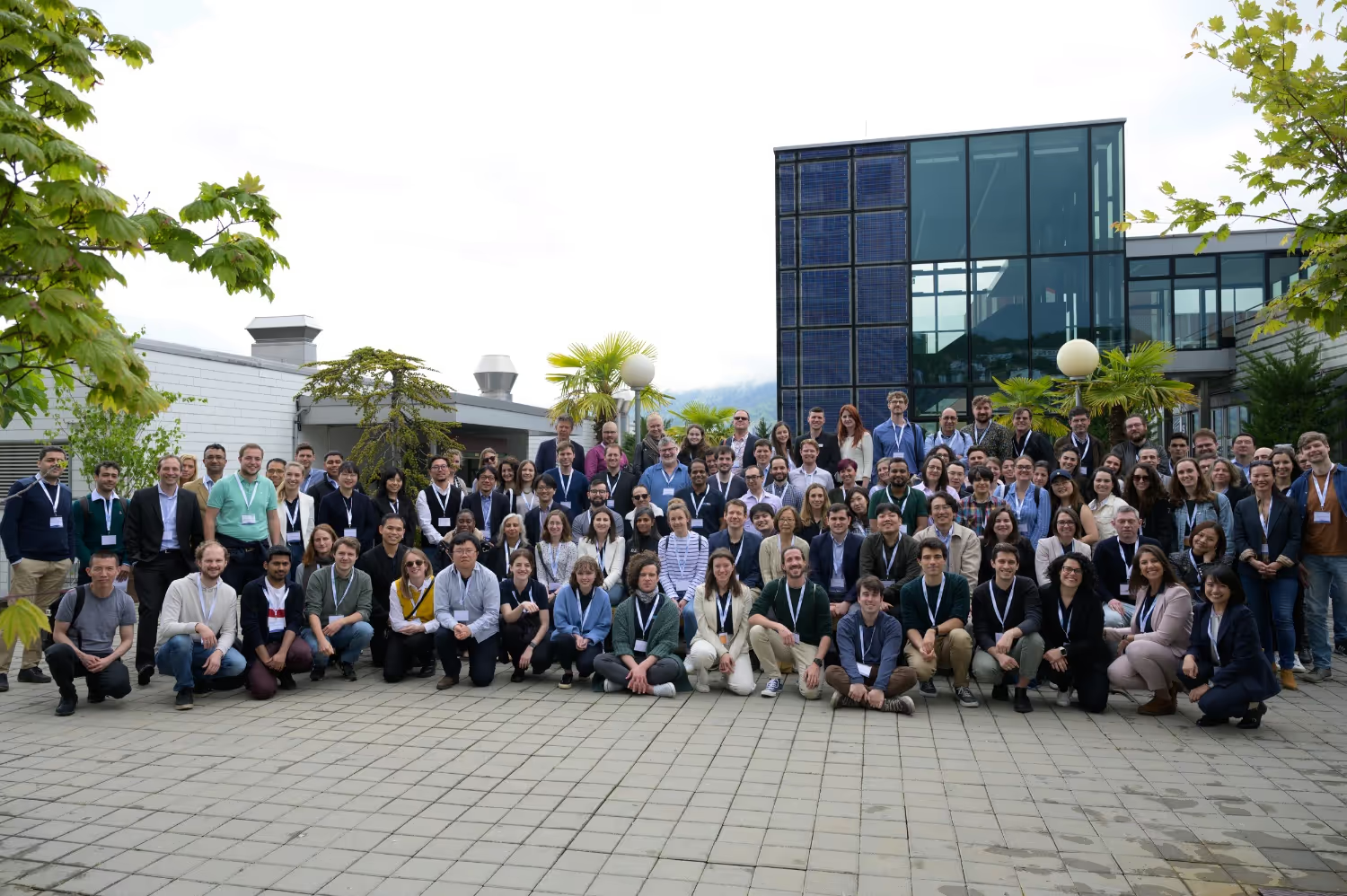
Community Voice is a hub for voices from the neuroscience community: neuroscientists, engineers, and method developers working across brain research, disease modeling, toxicology, and drug discovery.
Neuroscience today spans everything from biology-driven questions (how neural circuits develop, function, and fail in disease) to technology-driven innovation (new methods, advanced analysis, and neurocomputing approaches that connect neural data with computation and device interfaces). These insights are increasingly translated into scalable, high-throughput assays that accelerate therapeutic discovery and strengthen decision-making in drug development.
Community Voice brings these perspectives together, highlighting the people, ideas, and real-world research choices shaping the field.
User Stories
Meet the people behind the experiments: who they are as scientists and as individuals, what drives their work, and how HD-MEA technology advances their daily research. These pieces are more personal, shining a light on lab journeys, values, and perspectives, grounded in real-world experience with advanced tools and workflows.
Author Interviews
Highlight of specific studies, papers, and projects that reveal new insights in the field. These conversations focus on the science itself, directly from the author’s perspective, unpacking the research context, experimental approach, and key takeaways. Learn how leading experts use advanced electrophysiology platforms, assays, and analysis workflows.
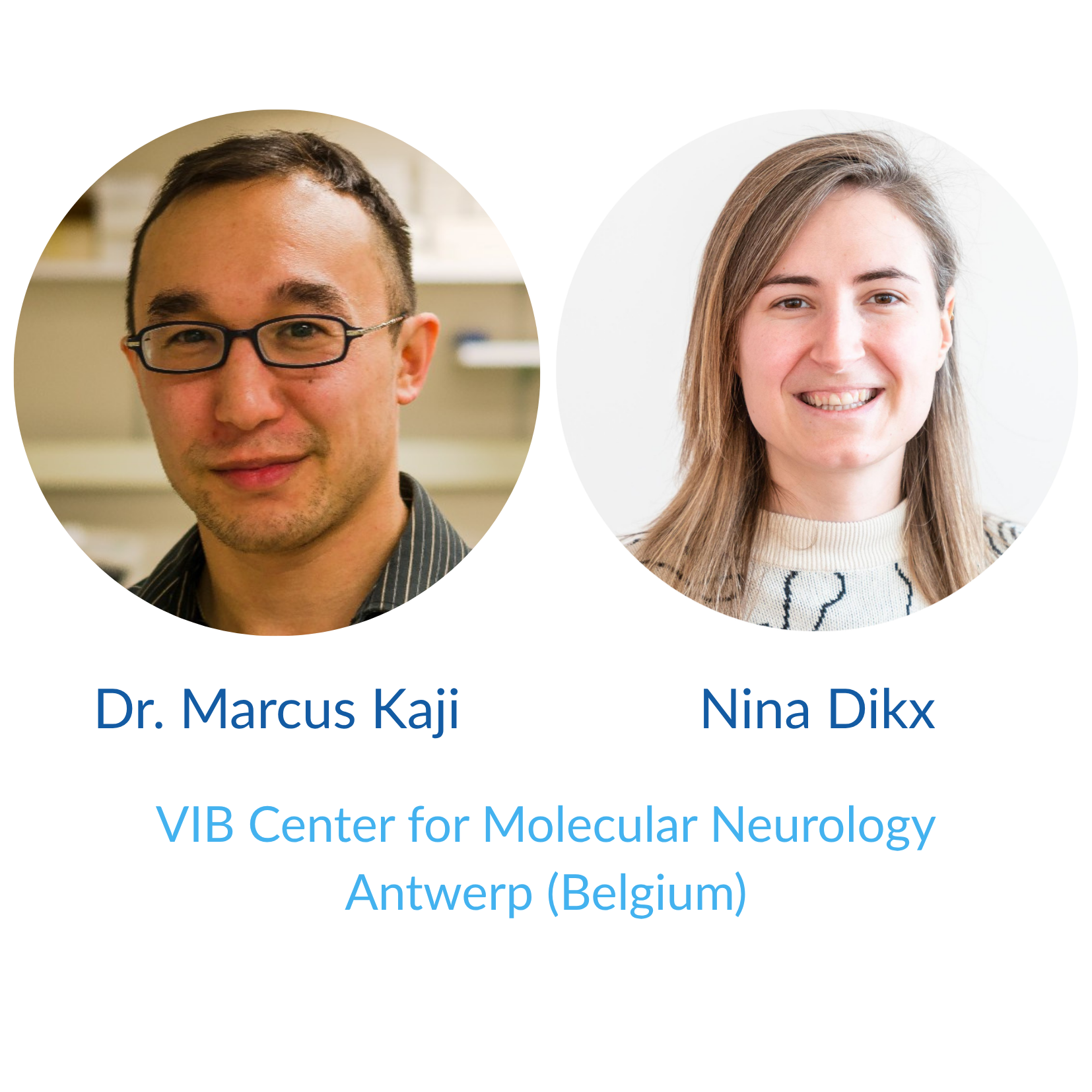
Modelling Rare Genetic Epilepsies with iPSC Neurons on MaxTwo HD-MEA
Interview with Dr. Marcus Kaji and Nina Dirkx from the VIB Center for Molecular Neurology in Antwerp on using patient-derived iPSC neuronal models and the MaxTwo HD-MEA System to study rare genetic epilepsies. They share how high-density recordings revealed striking phenotypes across neural development, and how the MaxTwo 24-Well Plate and MaxLab Live streamlined their data analysis workflows.
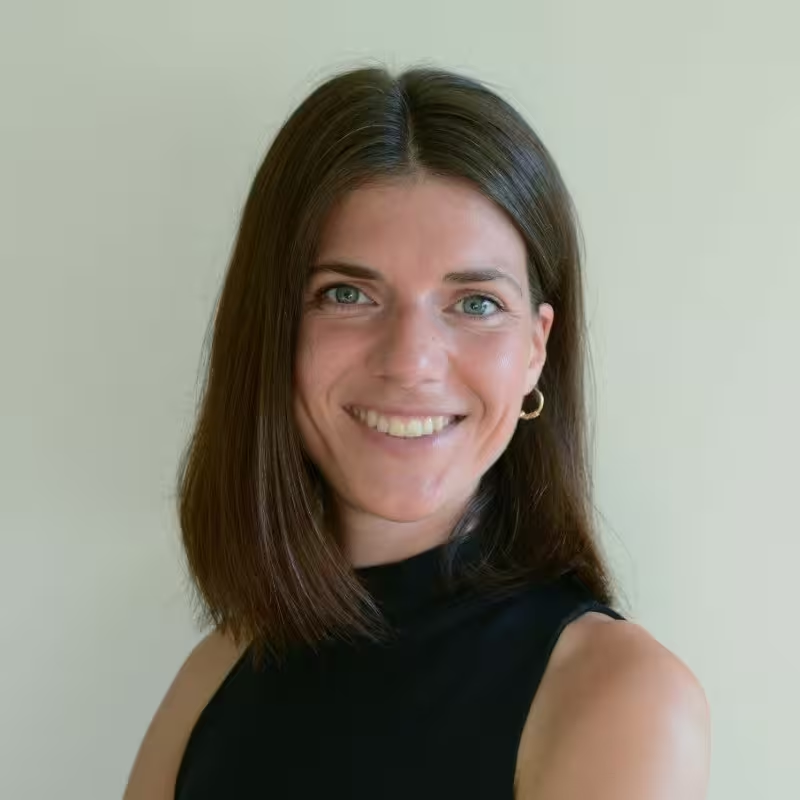
Modeling Pain-Related Nociceptive Networks with HD-MEA and Microfluidics
Interview with Dr. Blandine Clement on using MaxOne HD-MEA and microfluidics to study nociceptive networks and peripheral pain mechanisms.

Engineering iPSC Brain-Organoid Networks on MaxOne HD-MEA
Interview with Prof. Dr. Yoshiho Ikeuchi on building organoid-based inter-regional neural networks from iPSCs. He shares how MaxOne HD-MEA and new MaxOne+ chips enable long-term, high-resolution recording and programmable control.
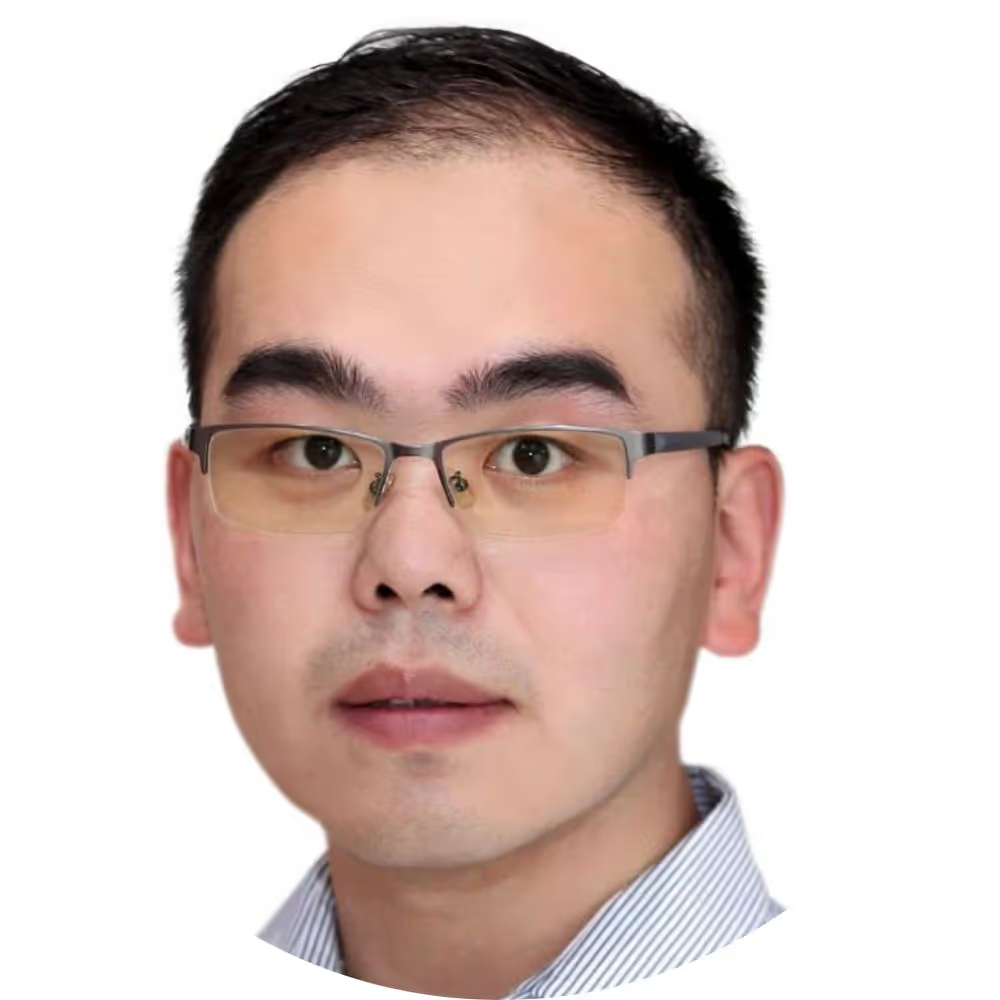
Brain Organoid Reservoir Computing on MaxOne HD-MEA
Join us for a chat with Prof. Dr. Feng Guo on how brain organoids + MaxOne HD-MEA can process, learn, and remember: a bold new step toward biocomputing and AI.
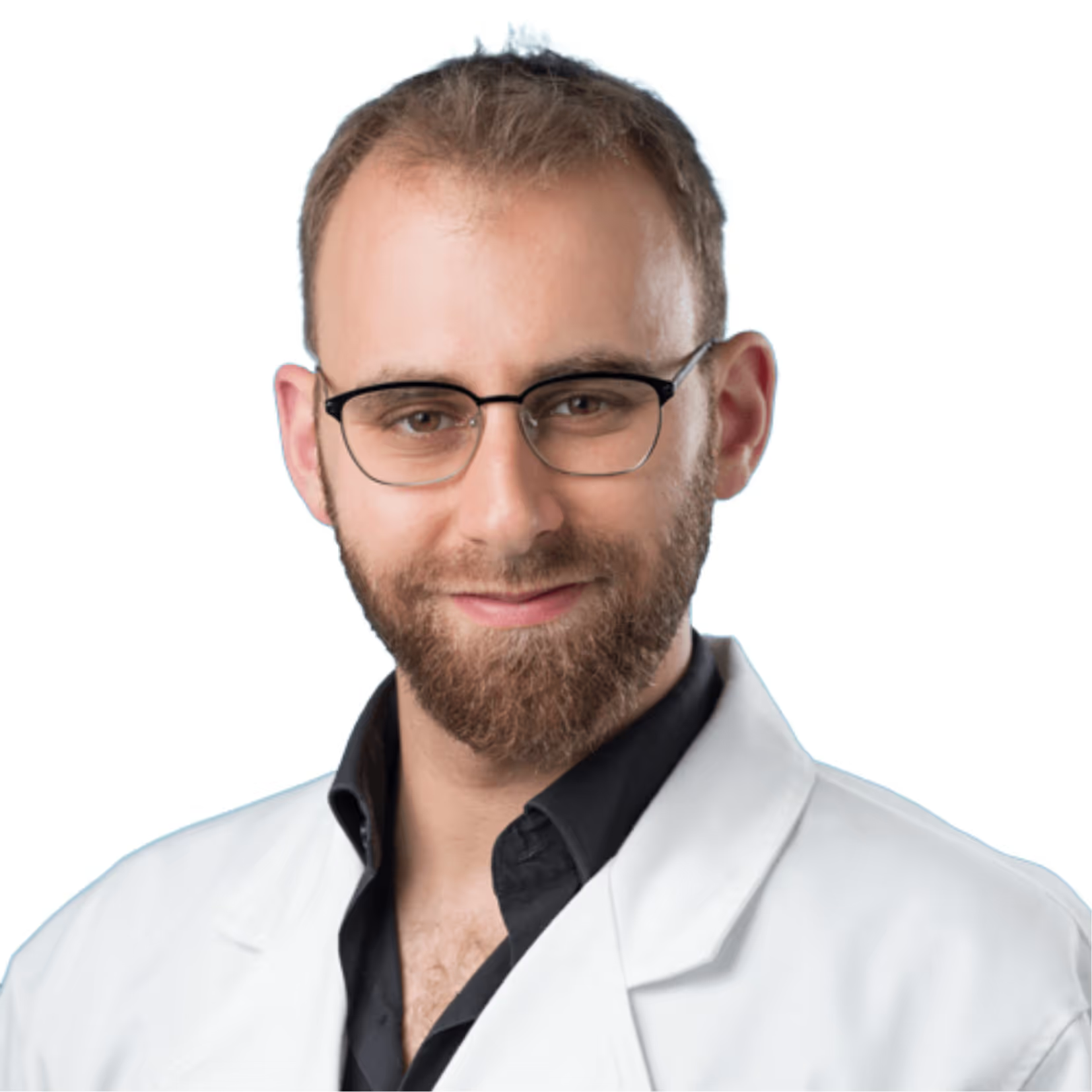
Training Living Neural Networks to Play Pong on MaxOne HD-MEA
Interview with Dr. Brett Kagan (Cortical Labs) on “DishBrain” and training neural cultures to play Pong using MaxOne HD-MEA stimulation and recording. He discusses the value of a configurable interface, real-time interaction via API, and what’s next for biocomputing.

Engineering Human iPSC Neural Circuits with Microfluidics and HD-MEA
Interview with Dr. Rouhollah Habibey on building on-chip human neuronal circuits with microfluidics and optogenetics. He shows how MaxOne HD-MEA and MaxLab Live track network growth and functional phenotypes over time.
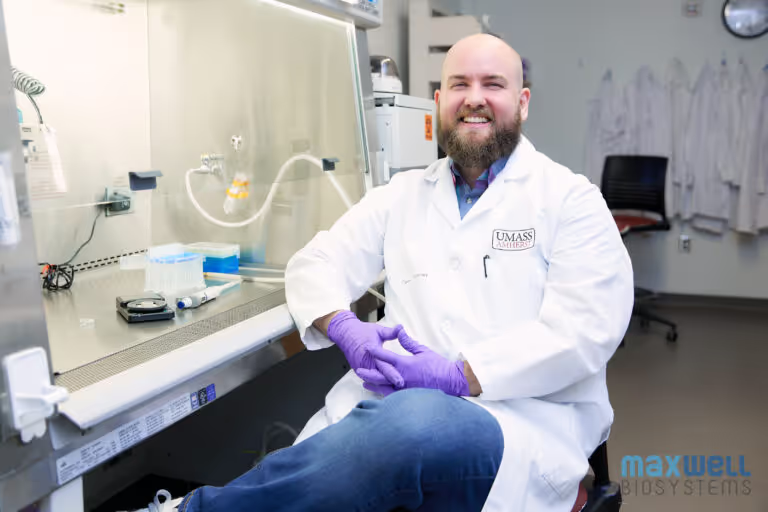
Functional Phenotyping of Neurodevelopmental Disease Models on MaxOne HD-MEA
Interview with Danny McSweeney on how CASK loss-of-function affects neuronal maturation and network synchrony in human induced excitatory neurons. He shares how MaxOne HD-MEA and MaxLab Live enable easy recordings and built-in analysis across genotypes.
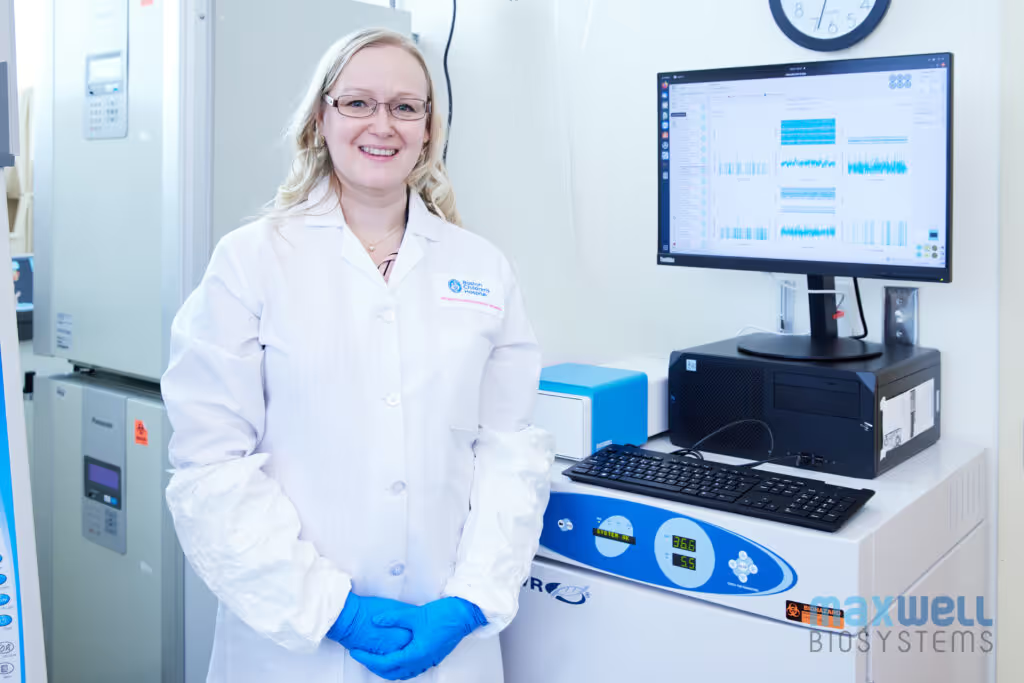
Modeling Neurodevelopmental Disorders with Human iPSC Networks on HD-MEA
Dr. Maria Sundberg shares how her team models 16p11.2 deletion using human iPSC-derived neuronal networks. She explains how MaxTwo HD-MEA and MaxLab Live enable detailed network phenotyping and axon tracking.
Modelling Rare Genetic Epilepsies with iPSC Neurons on MaxTwo HD-MEA
Interview with Dr. Marcus Kaji and Nina Dirkx from the VIB Center for Molecular Neurology in Antwerp on using patient-derived iPSC neuronal models and the MaxTwo HD-MEA System to study rare genetic epilepsies. They share how high-density recordings revealed striking phenotypes across neural development, and how the MaxTwo 24-Well Plate and MaxLab Live streamlined their data analysis workflows.
Modeling Pain-Related Nociceptive Networks with HD-MEA and Microfluidics
Interview with Dr. Blandine Clement on using MaxOne HD-MEA and microfluidics to study nociceptive networks and peripheral pain mechanisms.
Engineering iPSC Brain-Organoid Networks on MaxOne HD-MEA
Interview with Prof. Dr. Yoshiho Ikeuchi on building organoid-based inter-regional neural networks from iPSCs. He shares how MaxOne HD-MEA and new MaxOne+ chips enable long-term, high-resolution recording and programmable control.
Brain Organoid Reservoir Computing on MaxOne HD-MEA
Join us for a chat with Prof. Dr. Feng Guo on how brain organoids + MaxOne HD-MEA can process, learn, and remember: a bold new step toward biocomputing and AI.
Engineering Human iPSC Neural Circuits with Microfluidics and HD-MEA
Interview with Dr. Rouhollah Habibey on building on-chip human neuronal circuits with microfluidics and optogenetics. He shows how MaxOne HD-MEA and MaxLab Live track network growth and functional phenotypes over time.
Modeling Neurodevelopmental Disorders with Human iPSC Networks on HD-MEA
Dr. Maria Sundberg shares how her team models 16p11.2 deletion using human iPSC-derived neuronal networks. She explains how MaxTwo HD-MEA and MaxLab Live enable detailed network phenotyping and axon tracking.
Training Living Neural Networks to Play Pong on MaxOne HD-MEA
Interview with Dr. Brett Kagan (Cortical Labs) on “DishBrain” and training neural cultures to play Pong using MaxOne HD-MEA stimulation and recording. He discusses the value of a configurable interface, real-time interaction via API, and what’s next for biocomputing.
Functional Phenotyping of Neurodevelopmental Disease Models on MaxOne HD-MEA
Interview with Danny McSweeney on how CASK loss-of-function affects neuronal maturation and network synchrony in human induced excitatory neurons. He shares how MaxOne HD-MEA and MaxLab Live enable easy recordings and built-in analysis across genotypes.