
Webinars
Innovative research from scientists using MaxWell Biosystems' HD-MEA systems — we let the science speak for itself.
Upcoming Webinars

Past Webinars
June 25, 2026 | 16:00 CEST
7:00 PDT | 10:00 EDT | 15:00 BST
Advancing neurocomputing with engineered neuronal networks and high-content electrophysiology
The webinar covered
- Engineering modular connectivity in cultured cortical networks using microfluidic devices
- The relationship between network architecture, neural dynamics, and computational capacity
- Autonomous temporal pattern generation through closed-loop reservoir computing
- How living neuronal networks can serve as functional reservoirs for neurocomputing
- The role of HD-MEAs in enabling high-resolution, bidirectional interfacing at scale
May 26, 2026 | 17:00 CEST
8:00 PDT | 11:00 EDT | 16:00 BST
Driving innovation in human neural models of development and disease
The webinar covered
- Breakthrough research from MaxWell Biosystems users in neurodevelopment and neurological disease.
- Advances in neuron engineering and molecular analysis.
- How human neural models support development and disease research.
- Approaches linking molecular changes to neuronal function and axonal vulnerability.
- Strategies for generating more diverse and biologically relevant neural cell types in vitro.
Tuesday, April 28, 2026 | 17:00 CEST
08:00 PDT | 11:00 EDT | 23:00 CST | 00:00 JST
Neurocomputing with brain organoids: closed-loop learning and network dynamics
The webinar covered
- How brain organoids can be used to study network dynamics and functional organization in vitro.
- What it takes to run closed-loop electrophysiology: reading, writing, and feedback-driven training of living networks.
- How HD-MEA functional phenotyping can quantify changes in activity patterns and connectivity over time.
- How organoid bio-model advances translate into biocomputing-style benchmarks and experimental pipelines.
- Practical considerations for implementing these workflows on MaxOne (organoid culture, longitudinal recording, stimulation, and closed-loop interfacing).
.avif)
Tuesday, December 2nd, 2025 | 10:00 CET
01:00 PDT | 04:00 EDT | 17:00 CST | 18:00 JST
Neural Engineering for Restoring Vision
The webinar covered
- How HD-MEAs can record and characterize photoelectric activity from tellurium nanowire retinal nanoprostheses across visible and near-infrared wavelengths.
- Preclinical use of HD-MEAs to link implant-evoked retinal and cortical activity with restored light sensitivity and behavior in blind animal models.
- The use of HD-MEAs for large-scale ex vivo retinal recordings, enabling population-level monitoring of thousands of neurons for visual scene reconstruction.
- How HD-MEA–generated datasets and analysis pipelines can be used to evaluate and optimize visual prostheses and guide the design of advanced artificial visual systems.
.avif)
Wednesday, November 12, 2025 | 17:00 CET
08:00 PST | 11:00 EST | 00:00 CST | 01:00 JST
Human Retinal Signal Timing and Neural Computation
The webinar covered
- How the human retina synchronizes visual signals to create a seamless visual experience.
- Groundbreaking findings on the timing precision of visual pathways in the fovea.
- How High-Density Microelectrode Arrays (HD-MEAs) enabled direct measurement of action potential propagation in thousands of human retinal ganglion cells.
- The integration of electrophysiology, anatomical modeling, imaging, and human psychophysics to reveal the retina’s active role in synchronizing perception.
- Insights into how MxW Bio’s HD-MEA technology helps uncover neural computation mechanisms at subcellular resolution.
.avif)
- Episode 1: Wednesday, October 29, 2025 | 15:00 CET
- Episode 2: Monday, November 3, 2025 | 14:00 CET
- Episode 3: Tuesday, November 4, 2025 | 14:00 CET
MaxLab Live Training Webinar with Dr. Silvia Ronchi
The webinar covered
- A step-by-step demonstration of MaxLab Live’s core features for HD-MEA data visualization, recording, and analysis.
- Practical examples showing how to analyze and interpret electrophysiological data using automated tools.
- Insights on optimizing analysis parameters to extract relevant physiological metrics across various biological preparations.
- An overview of how MaxLab Live helps generate high-quality, publication-ready results with minimal manual processing.
.avif)
Tuesday, October 28, 2025 | 17:00 CET
09:00 PDT | 12:00 EDT | 00:00 CST | 01:00 JST
Scalable Human Neuron Differentiation and Functional Profiling
The webinar covered
- How combining transcription factoes overexpression with developmental signaling modulation enables the generation of diverse human neuron types.
- Findings from a comprehensive screen of 480 patterning conditions using single-cell transcriptomics on 700,000 cells.
- Functional profiling of neurons using MaxWell Biosystems’ MaxTwo HD-MEA platform to capture activity, connectivity, and morphological diversity across different patterning conditions.
- The relationship between transcriptomic signatures and neuronal structure, revealing mechanisms of maturation and identity formation.

Wednesday, September 24, 2025
17:00 CEST | 08:00 PDT | 11:00 EDT | 23:00 CST | 00:00 JST
Neurodegenerative Disease Modeling with Human iPSC-Derived Neurons
The webinar covered
- How the combination of MaxTwo Multi-Well High-Density Multielectrode Arrays (HD-MEA) and FUJIFILM hiPSC-derived neurons has opened new frontiers in investigating neurodegenerative disease mechanisms.
- Comparisons between disease-modeling neuronal lines for Parkinson’s, ALS, and FTD, with healthy donor data highlighting functional differences and disease phenotypes.
- The use of cutting-edge HD-MEA assays under optimized experimental conditions to detect even subtle phenotypic variations and to characterize disease models with greater precision.
Thursday, June 26, 2025 | 17:00 CEST
08:00 PDT | 11:00 EDT | 23:00 CST | 00:00 JST
Engineered Neural Networks for Disease Modeling and Drug Discovery
The webinar covered
- Micro- and nano-channel PDMS platforms enable directional neuronal network fabrication at single-neuron resolution.
- Integration with patient primary or iPSC-derived cells enables precise, personalized disease modeling.
- A biophysical modeling approach coupled with neuronal networks on a chip enables quantification of synaptic receptor alterations in isolated neuronal pairs.
- Application of information theory reveals increased feedback motifs and enhanced information transfer in glioblastoma-infiltrated neuronal networks

Wednesday, April 23, 2025 | 09:30 & 17:00 CEST
00:30 & 08:00 PDT | 03:30 & 11:00 EDT | 15:30 & 23:00 CST | 16:30 & 00:00 JST
Brain Organoid Network Models and Functional Connectivity
The webinar covered
- Inter-regional connectivity being key for complex brain functions
- Neural organoid networks serving as in vitro models of inter-regional brain circuits
- HD-MEAs enabling detailed analysis of organoid network activity and functional connectivity
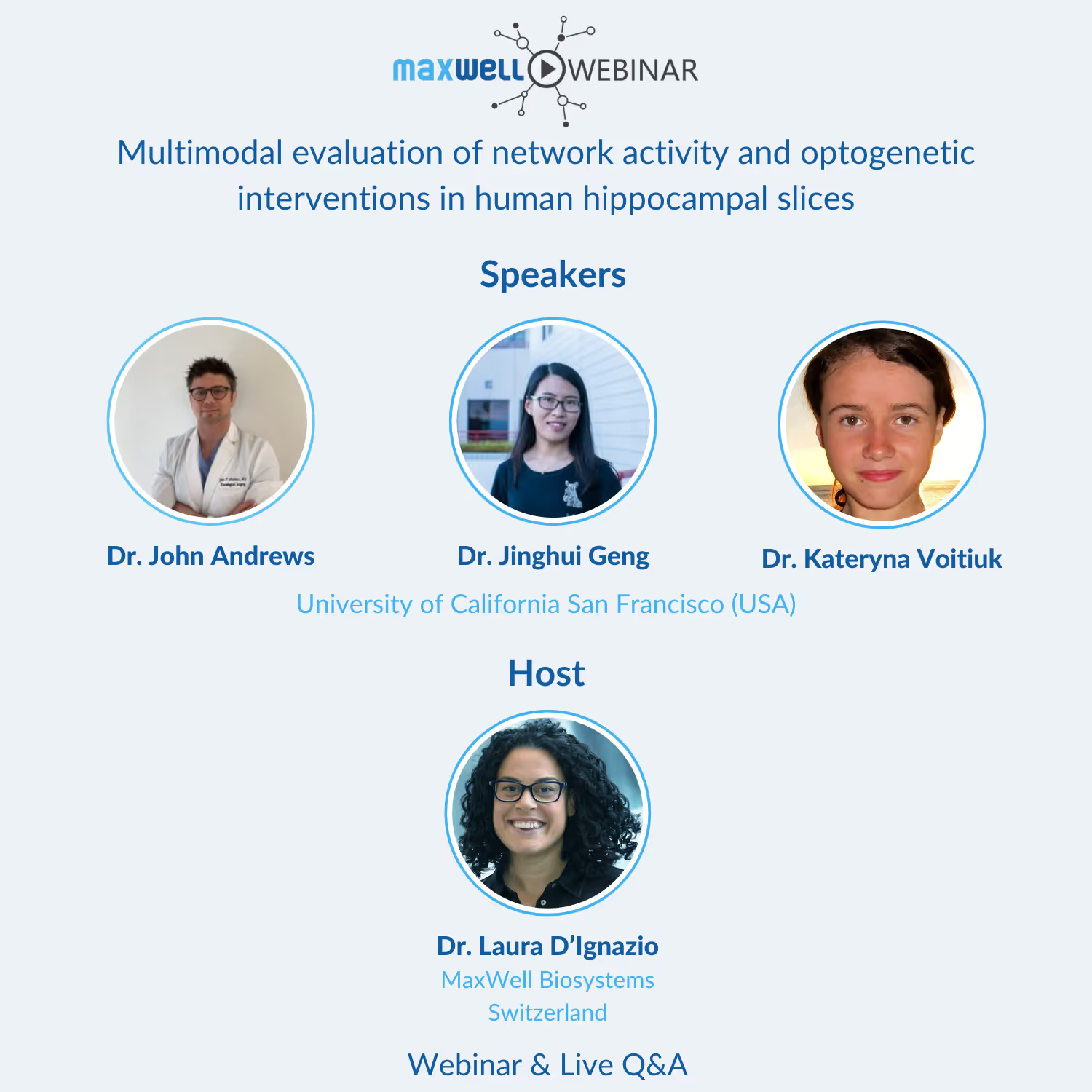
March 13, 2025 | 16:00 CET
08:00 PDT | 11:00 EDT | 23:00 CST | 00:00 JST
Human Epilepsy Network Dynamics and Optogenetic Neuromodulation
The webinar covered
- Human hippocampal tissue slices as a powerful model for studying epileptiform activity
- AAV-mediated optogenetic inhibition of glutamatergic neurons as a strategy to reduce epileptiform activity in human brain networks
- HD-MEA and optogenetics for precise evaluation of network activity in human brain tissue
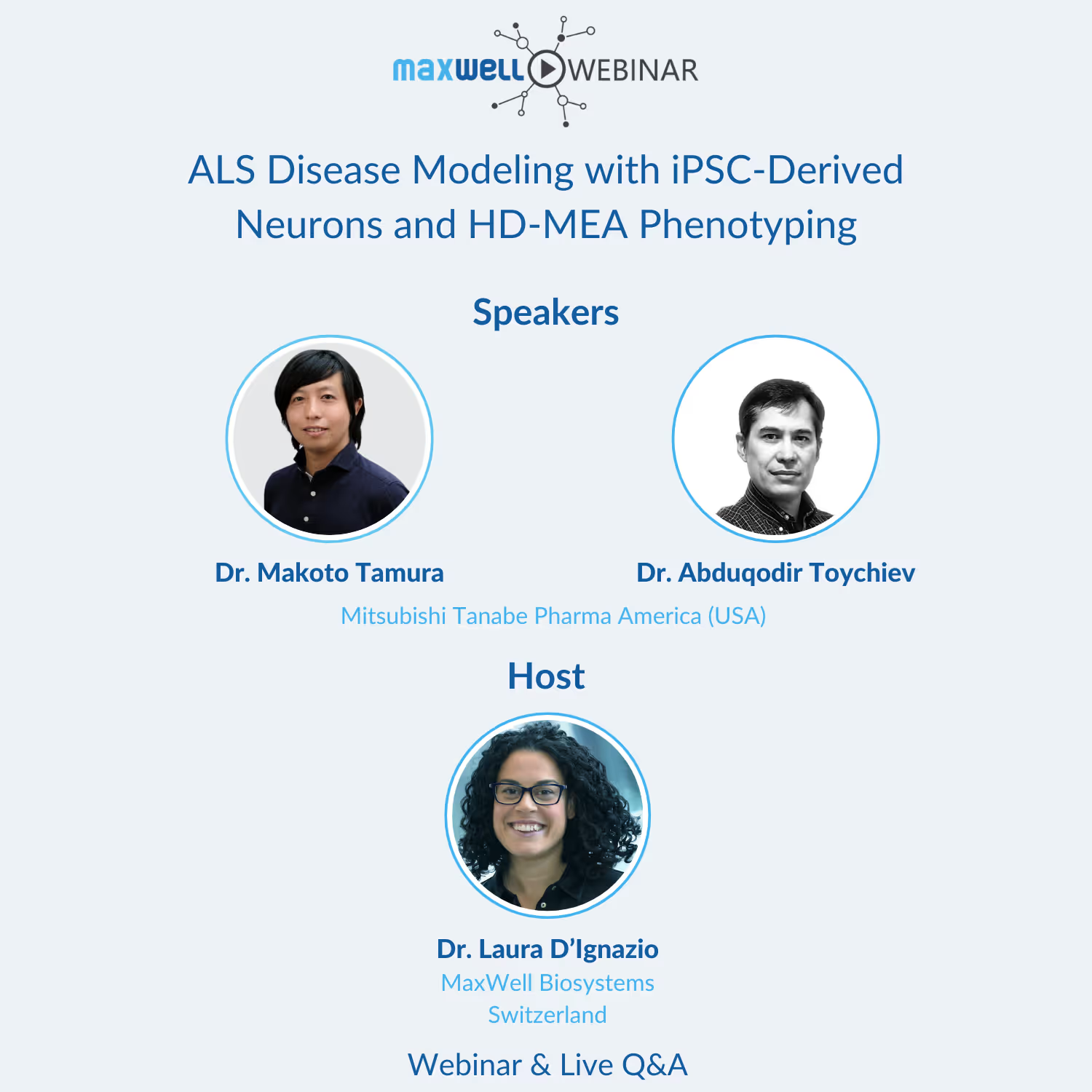
January 22, 2025 | 17:00 CET
08:00 PST | 11:00 EST | 00:00 CST | 01:00 JST
ALS Disease Modeling with iPSC-Derived Neurons and HD-MEA Phenotyping
The webinar covered
- iPSC-derived neurons with and without Transactive Response DNA-binding Protein mutations from ALS patients
- HD-MEA insights into functional changes, including hyperactivity and altered network dynamics in mutated neurons
- Foundational knowledge to advance targeted ALS treatment development
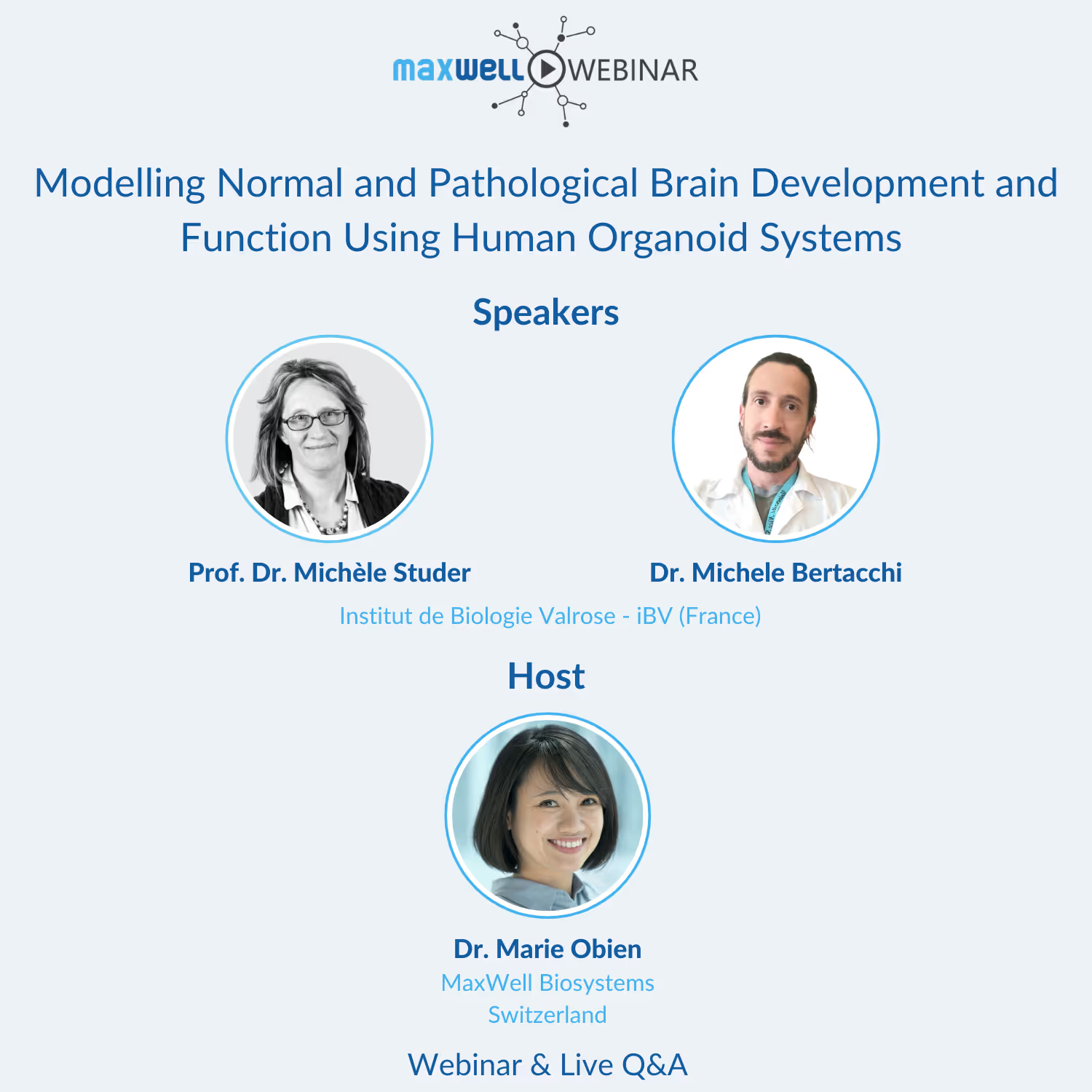
December 3, 2024 | 17:00 CET
08:00 PST | 11:00 EST | 00:00 CST | 01:00 JST
Organoid-Based Models of Brain Development and Glioblastoma
The webinar covered
- iPSC-derived organoids as a powerful tool to replicate brain development, function, and pathology.
- Exploration of the impact of FGF8 signaling on neocortical identity and glioblastoma invasion.
- The role of HD-MEAs in studying human neuronal organoids and the associated challenges.
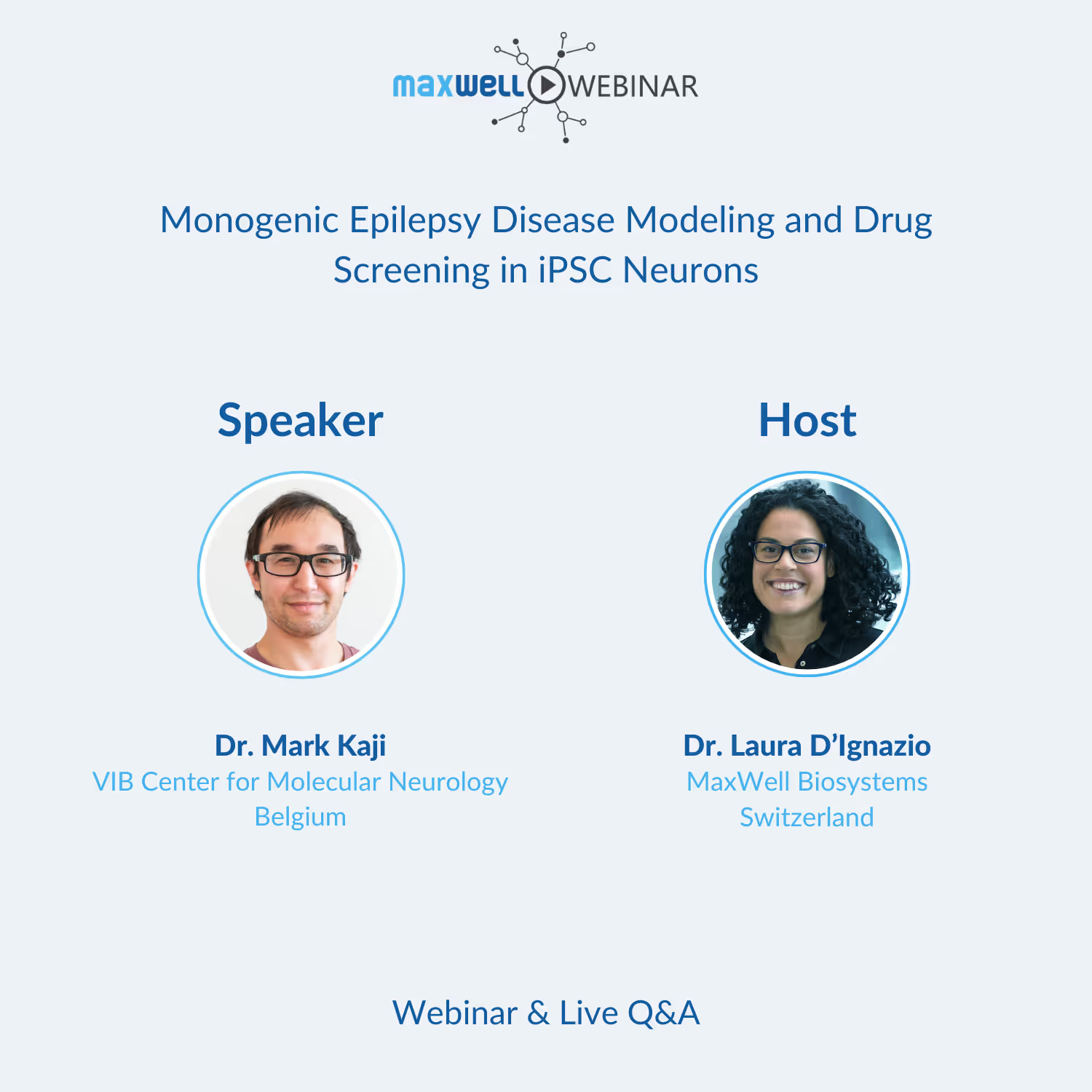
November 19, 2024 | 17:00 CEST
08:00 PDT | 11:00 EDT | 23:00 CST | 00:00 JST
Monogenic Epilepsy Disease Modeling and Drug Screening in iPSC Neurons
The webinar covered
- The role of KCNQ2 in neurodevelopment, including the outcomes of this gene mutation.
- Unique network characteristics identified for both KCNQ2 loss- and gain-of-function.
- How these findings can support drug development efforts for KCNQ2 disorders.
- HD-MEA’s contribution to expanding the toolkit for screening new therapies with human-derived in vitro models