
MxW Workshop Tokyo 2026
A One-Day User Meeting for Scientific Discovery and Community Exchange in Tokyo.
Place
Tokyo, Japan
Date
Time
Welcome Remarks
Invited Talks
Reception & Networking

Decoding Neural Dynamics: From Neuro-Computation to Disease Signatures
Join us in Tokyo for a one-day user meeting focused on decoding neural dynamics, from neuro-computation to disease signatures. The workshop will offer an opportunity to connect with researchers, exchange ideas, and discuss new developments shaping the future of in vitro neuroscience.
Register using the form below to secure your place.

Speakers Lineup
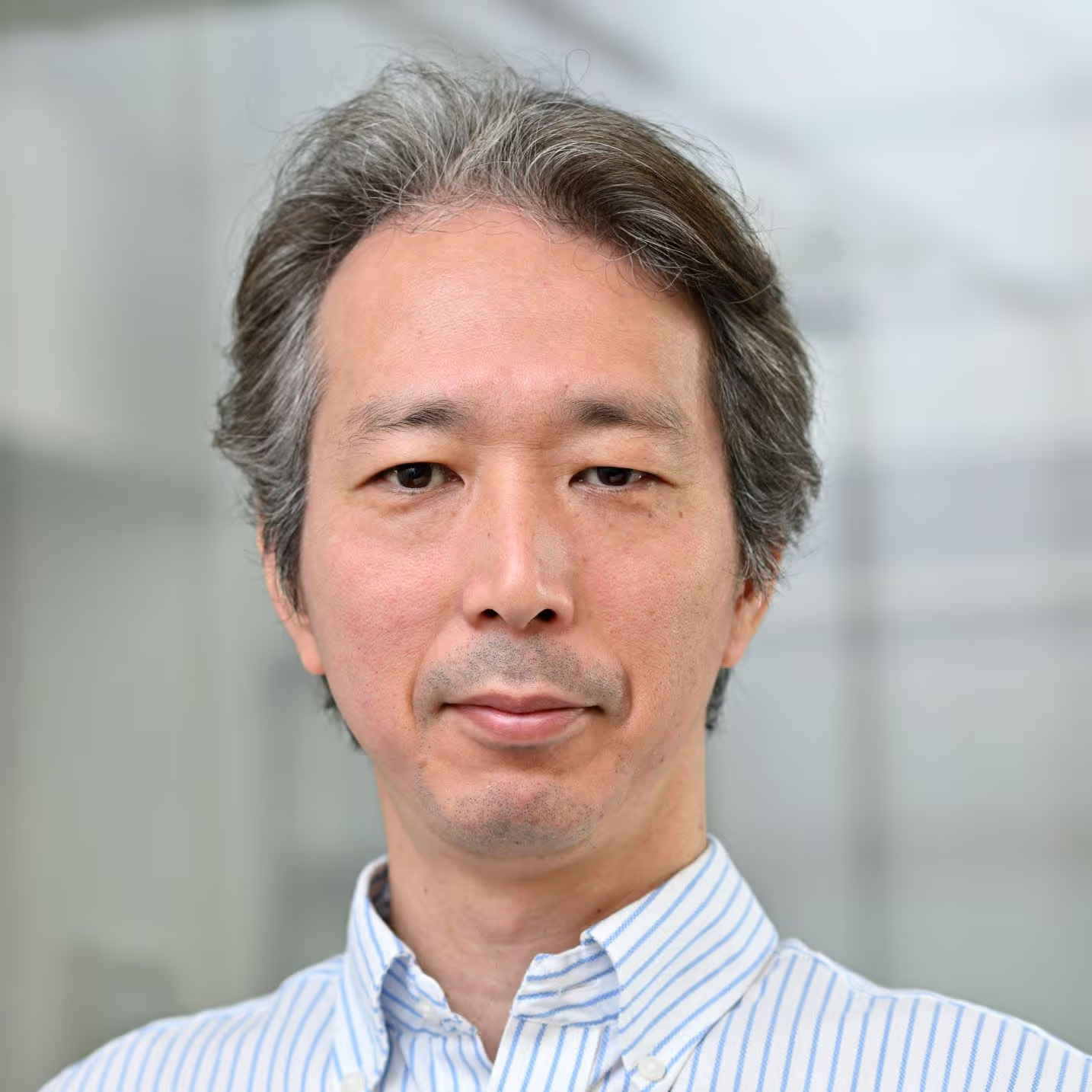
Hirokazu Takahashi was born in Sendai, Japan, in 1975. He received B.S., M.S., and Ph.D. degrees in mechanical engineering from the University of Tokyo, Tokyo, Japan, in 1998, 2000, and 2003, respectively. After working as a research associate in Department of Engineering Synthesis, the University of Tokyo, he has joined Department of Mechano-Informatics, the Graduate School of Information Science and Technology, the University of Tokyo, as an assistant professor since 2004. In 2006, he has joined the Research Center for Advanced Science and Technology. In 2019, he has returned to Department of Mechano-Informatics, the Graduate School of Information Science and Technology, as an associate professor, and become a professor in 2023. For many years, his research has focused on intelligence. By comparing artificial intelligence with the brain, he has sought to uncover the origins of biological intelligence, studying brain activity across a wide range of scales—from cultured neurons to rodents and humans. He first met Dr. Urs Frey around 2010, and has been fascinated by CMOS technology ever since.
Functional role of spontaneous activity
The brain differs significantly from a digital computer in that it displays spontaneous activity, even in a state of complete rest. Why does the brain not eliminate spontaneous activity even under strong evolutionary selection pressure for an energy-efficient system? Inspired by the critical brain hypothesis, which proposes that the brain operates optimally near a critical point of phase transition in the dynamics of neural networks to improve computational efficiency, we postulate that spontaneous activity plays a homeostatic role in the development and maintenance of criticality. Our data suggest that the brain may achieve self-optimization and memory consolidation as emergent functions of noise-driven, spontaneous activity. Noise-harnessing computation represents an evolutionary adaptation of the brain, which has been destined to be as energy-efficient as possible and to operate in harsh biochemical environments with low signal-to-noise ratios.

Waka Lin is Manager of the Neuroscience Section at the Biomedical Business Center of Ricoh Company, Ltd. She received her Ph.D. from the Curie Institute in France and completed postdoctoral training at the University of Tokyo. Her work has spanned the development of new approach methodologies (NAMs) at Japan’s National Institute of Health Sciences and regenerative medicine products in the startup sector. In her current role at Ricoh, she leads projects focused on developing brain disease models and advanced assay platforms using iPSC-derived neurons.
Multimodal evaluation platform using human iPSC-derived mature neurons
Human iPSC-derived neurons have emerged as promising in vitro model for accelerating research and drug discovery in CNS disorders; however, insufficient maturation—particularly in dendritic spine formation and functional network organization—remains a key limitation. Here, we present a multimodal evaluation platform built on human iPSC-derived mature neurons that addresses these challenges.
Using a proprietary rapid differentiation protocol combined with optimized culture conditions, we reproducibly generated morphologically and functionally mature excitatory neurons. Integrated analysis combining AI-based quantification of synaptic markers with HD-MEA-based longitudinal recordings enabled simultaneous assessment of synaptic structure and network dynamics.
Leveraging the high spatial resolution of HD-MEA, we further implemented a single-cell-level approach to identify synaptically connected neuronal pairs and quantify connectivity metrics such as pair number and synaptic transmission strength. This enables detection of connectivity-level phenotypes not captured by conventional population-averaged measures.
This platform supports phenotypic profiling using patient iPSC-derived neurons and compound screening, providing a scalable and reproducible framework for next-generation CNS drug discovery.
Koichi Muramatsu is a researcher in the Neuroscience Section at the Biomedical Business Center, Ricoh Company, Ltd. With a background in mechanical engineering, he brings expertise in electrical signal processing and analysis to interdisciplinary projects at Ricoh. He currently contributes to the design and evaluation of HD-MEA–based assays and drives advanced synaptic connectivity analysis for the development of data-driven neurotechnology platforms.
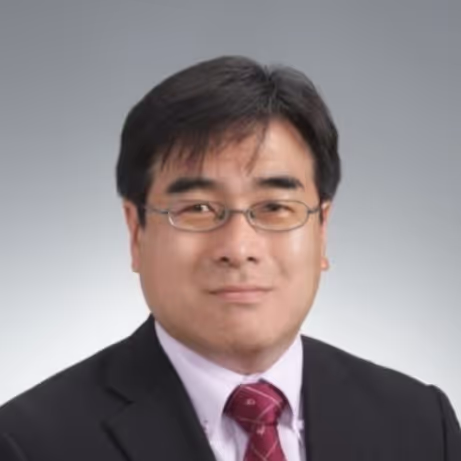
Dr. Kanda currently serves as Division head of Pharmacology at National Institute of Health Sciences (NIHS) Japan. His research area is regulatory science, which seeks to apply new approach methodologies (NAM) to the review process and bridge the gap between scientific innovation and safety issues.
He has coordinated the JiCSA (Japan iPS Cardiac Safety Assessment) consortium, including the development and validation of test methods using iPSC-derived cardiomyocytes, and has collaborated with US FDA, Comprehensive In Vitro Proarrhythmia Assay (CiPA), and HESI Cardiac Safety Committee. He has worked with HESI NeuTox Committee in terms of seizure liability and other projects, such as PBPK and DART. In addition, he has contributed to OECD guidances (Good In Vitro Method Practice, Developmental Neurotoxicity, and PBPK) as an expert group.
He is a member of the Board of Directors of US Health and Environmental Sciences Institute (HESI), European Society of Toxicology In Vitro (ESTIV) and the Japanese Society for Alternatives to Animal Experiments (JSAAE) to promote NAMs. He serves as the Editorial Board Member of Scientific Reports, Cardiovascular Toxicology, Journal of Pharmacological Sciences. He has published over 100 peer-reviewed journal articles and book chapters related to assessing the safety and effectiveness of drugs and chemicals.
He received B.S. degree, M.S. degree, and Ph.D. degree from the University of Tokyo. After he worked as a research assistant professor in National Defense Medical College, he has worked on regulatory science research since joining the Division of Pharmacology, NIHS as a section head in 2008 and has been promoted as a Division head in 2017.
Modernizing Safety Pharmacology: Opportunities and Challenges of NAMs
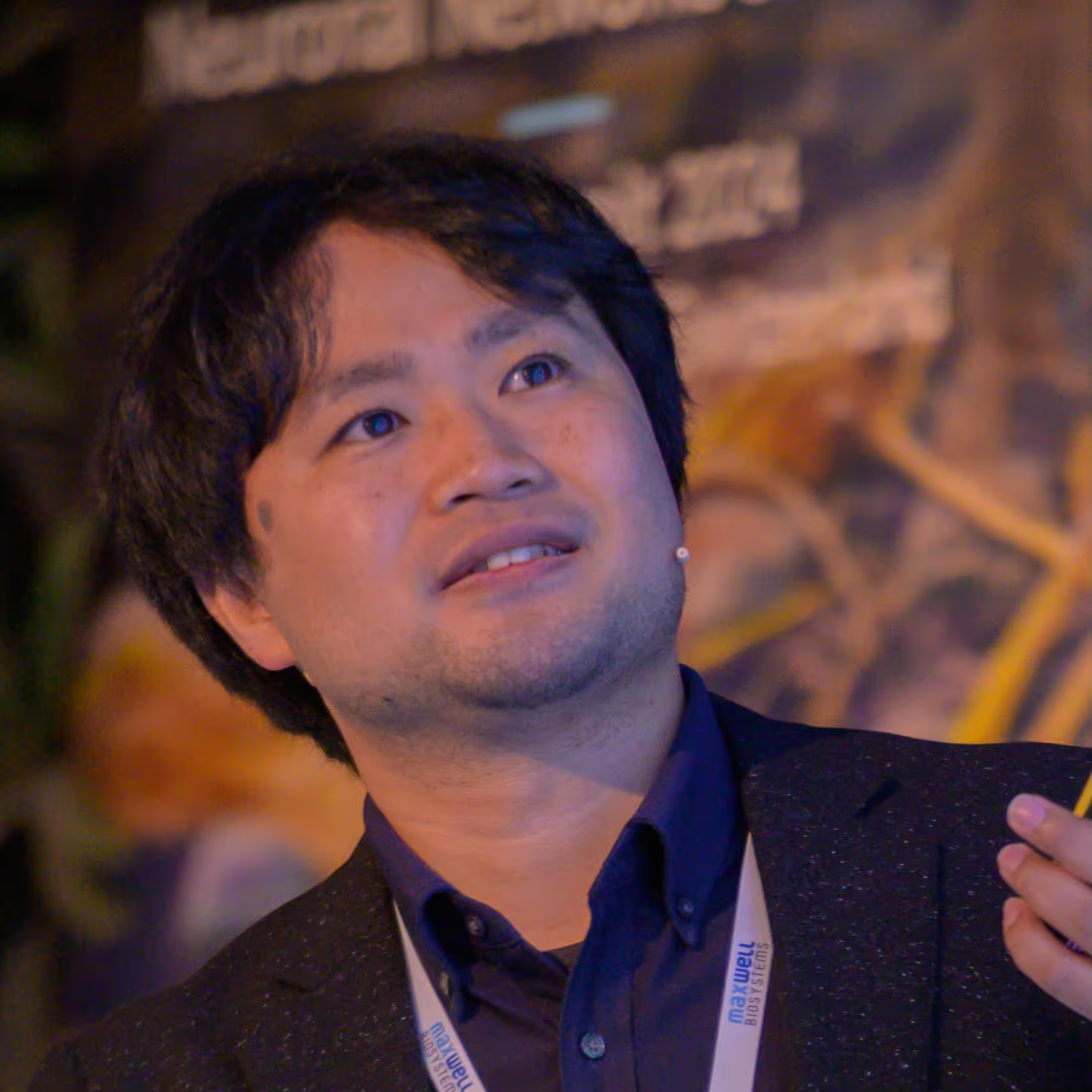
Kenta Shimba is an Associate Professor at the Mathematical Biology and Bioengineering Laboratory, Graduate School of Frontier Sciences, The University of Tokyo. He received his Ph.D. from the University of Tokyo under the supervision of Prof. Yasuhiko Jimbo. After working as a postdoctoral researcher at Tokyo Institute of Technology, he joined the Graduate School of Engineering at the University of Tokyo as an Assistant Professor. He currently holds his position at the Graduate School of Frontier Sciences. His research interests include microdevice fabrication and method development for studying axon physiology and network interactions.
Bottom-Up Investigation of Spinal Sensory Circuits with HD-MEA and Molecular Approaches
The spinal cord transmits tactile and nociceptive information to the brain, and abnormalities in spinal circuits can lead to sensory dysfunction and pathological pain. However, the spinal cord contains diverse neuronal populations that form highly complex circuits, making functional analysis difficult. In vitro culture systems provide a useful bottom-up approach for studying spinal neuronal function in simplified environments. High-density microelectrode arrays (HD-MEAs) enable electrophysiological recording from single-cell to network scales, and integration with molecular biological methods allows multimodal characterization of cultured neurons. In this presentation, I will introduce examples of functional evaluation of cultured spinal cord neurons using combined HD-MEA recordings and molecular biological analyses, highlighting approaches for investigating spinal sensory circuits.
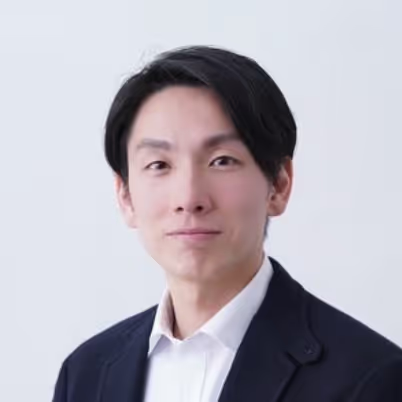
Shoi Shi, Ph.D., is a Principal Investigator at the International Institute for Integrative Sleep Medicine (WPI-IIIS), University of Tsukuba. He received his Ph.D. from the University of Tokyo, where he subsequently served as an Assistant Professor and Group Leader in the ERATO Ueda Biological Timing Project before joining WPI-IIIS. His research focuses on the mechanisms and functions of sleep, integrating molecular biology, electrophysiology, and computational modeling to understand how sleep need is generated, encoded, and resolved.
Toward Solving the Mystery of Sleep Using an In Vitro Sleep MEA System
Sleep is one of the most fundamental yet least understood biological processes. Over the past two decades, the outlines of a mechanistic understanding have begun to emerge. Recent studies suggest that synaptic strength may encode sleep homeostasis; however, the molecular mechanisms underlying wakefulness-induced sleep need accumulation and synaptic potentiation remain largely unknown. High-density multi-electrode array systems provide a unique opportunity to bridge molecular and neurophysiological mechanisms with organism-level sleep phenotypes. In this talk, I will discuss recent advances in sleep regulation and highlight the unique and powerful role that in vitro sleep systems can play in addressing the mystery of sleep.
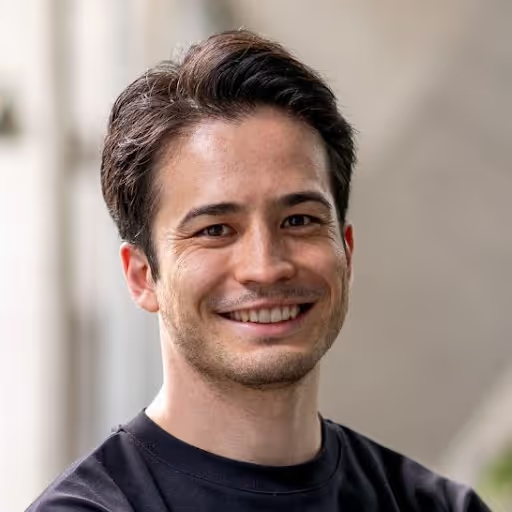
Tomoya Duenki is assistant professor in the laboratory of Prof. Yoshiho Ikeuchi at the University of Tokyo working on neuroengineering approaches to improve brain organoid research. His work combines electrophysiology, optogenetics, and microfluidic engineering to develop advanced in vitro models and experimental platforms for studying neural activity, brain function, and disease mechanisms.
Scalable Cerebral Organoid Networks for Studying Emergent Network Dynamics
Reconstructing physiologically relevant neuronal networks in vitro is essential for understanding brain development, function and disease. Human cerebral organoids provide a promising platform, but conventional systems remain limited in connectivity and scalability. We engineered modular organoid networks called “connectoids” in which multiple organoids are connected through axon bundles using microfluidic devices. Electrical recordings revealed that increasing network size from single organoids to multi-organoid connectoids resulted in progressively more complex neural dynamics and the emergence of functionally specialized network nodes. Optogenetic and electrical stimulation further demonstrated robust responses and controllable entrainment of activity propagation across the network. Repeated stimulation led to significant improvement in a source signal discrimination task specifically in multi-organoid networks, accompanied by progressive refinement of functional connectivity. Together, these scalable connectoid system provides a platform for studying emergent neural dynamics, plasticity and circuit organization using HD-MEAs.
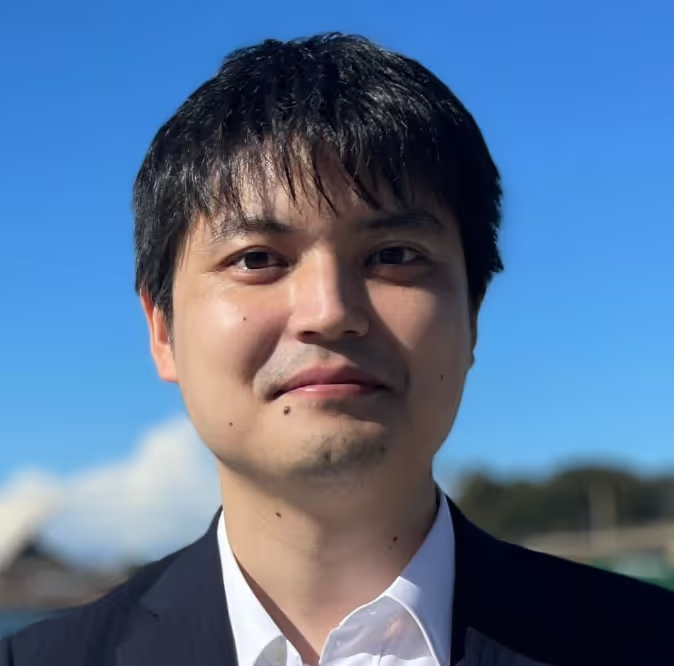
Dai Akita earned his PhD in Life Science from Hokkaido University in 2017, focusing on the mathematical and experimental study of slime mold. After completing his doctoral studies, he joined Mizuho-DL Financial Technology Co., Ltd. as a financial engineer and worked there until 2022. Upon leaving the company, he joined the Takahashi-Shiramatsu Laboratory at the University of Tokyo. Currently, he is researching information processing in neuronal cultures, employing approaches such as reservoir computing, the free energy principle, and simulations of spiking neural networks.
Noise-Aware Information Processing Capacity in Living Neuronal Reservoirs
Physical reservoir computing (PRC) with living neuronal cultures has been widely studied as a framework for exploiting biological dynamics for computation. In reservoir computing, which underlies PRC, the reservoir is often idealized as a fixed, deterministic dynamical system whose response is reproducible for a given input. Living neuronal cultures deviate from this ideal in two important ways: their activity fluctuates from trial to trial, and their dynamics can drift over time through plasticity-related and state-dependent changes. This talk asks how strongly these biological imperfections affect the computational power of cultured-neuron reservoirs. Using Information Processing Capacity (IPC) as a task-independent measure, we propose a method to analyze the fluctuating component of the reservoir state and predict how IPC would change as trial-to-trial noise is reduced. This framework provides insight into improving the computational performance of living neuronal reservoirs.
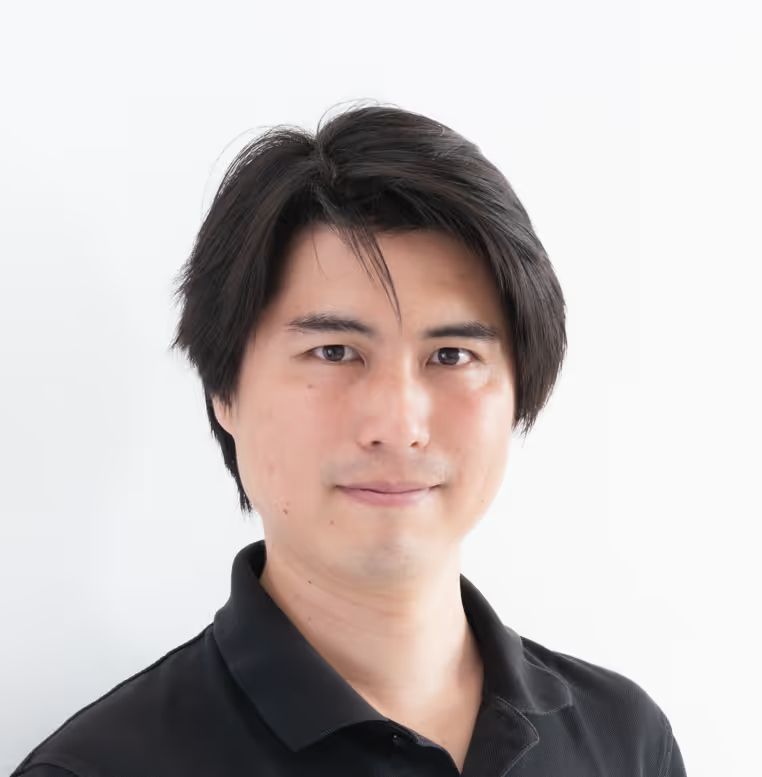
Koji Ode is an Associate Professor of Graduate School of Medicine at the University of Tokyo, Japan. He is also a group leader of ERATO Biological timing project led by Prof. Hiroki Ueda. His work focuses on how protein phosphorylation controls the circadian clock and sleep-wake cycle in mammals. From a more general perspective, his interest is how the dynamics of basic biochemical reactions can be reflected in a complex biological output such as animal behaviors. He used to be a tennis player and boulderer, but these days he is solely observing the importance of sleep in (his) children.
Homeostatic Switching Between Synchronous and Asynchronous Firing in Cortical Neurons on HD-MEAs
NREM sleep in mammals is characterized by high-amplitude EEG activity in the delta frequency band (~0.5–4 Hz), which is generated by synchronous bursting–resting firing cycles among cortical neurons. Previous studies have demonstrated that synchronized neuronal firing patterns observed in cultured cortical neurons correlate with gene expression profiles, metabolic states, and homeostatic responses during sleep in vivo. However, the conditions under which sleep-like synchronous firing states and awake-like asynchronous firing states reversibly and autonomously alternate remain unclear. In this study, we investigated the conditions under which synchronous and asynchronous firing in mouse cortical neurons cultured on high-density multi-electrode arrays (HD-MEAs) can be reversibly modulated. We found that within a restricted range of CaMKII activity, cultured cortical neurons do not remain in either the synchronous or asynchronous firing state, but instead repeatedly transition between the two. Furthermore, prolonged awake-like asynchronous firing facilitated subsequent transitions to the sleep-like synchronous firing state. Taken together, these results indicate that the reversible and homeostatic transitions between synchronous and asynchronous firing observed in cultured cortical neurons in vitro recapitulate, at least in part, key features of sleep–wake rhythms at the organismal level.