Modelling Rare Genetic Epilepsies with iPSC Neurons on MaxTwo HD-MEA
Date
Type
Tags
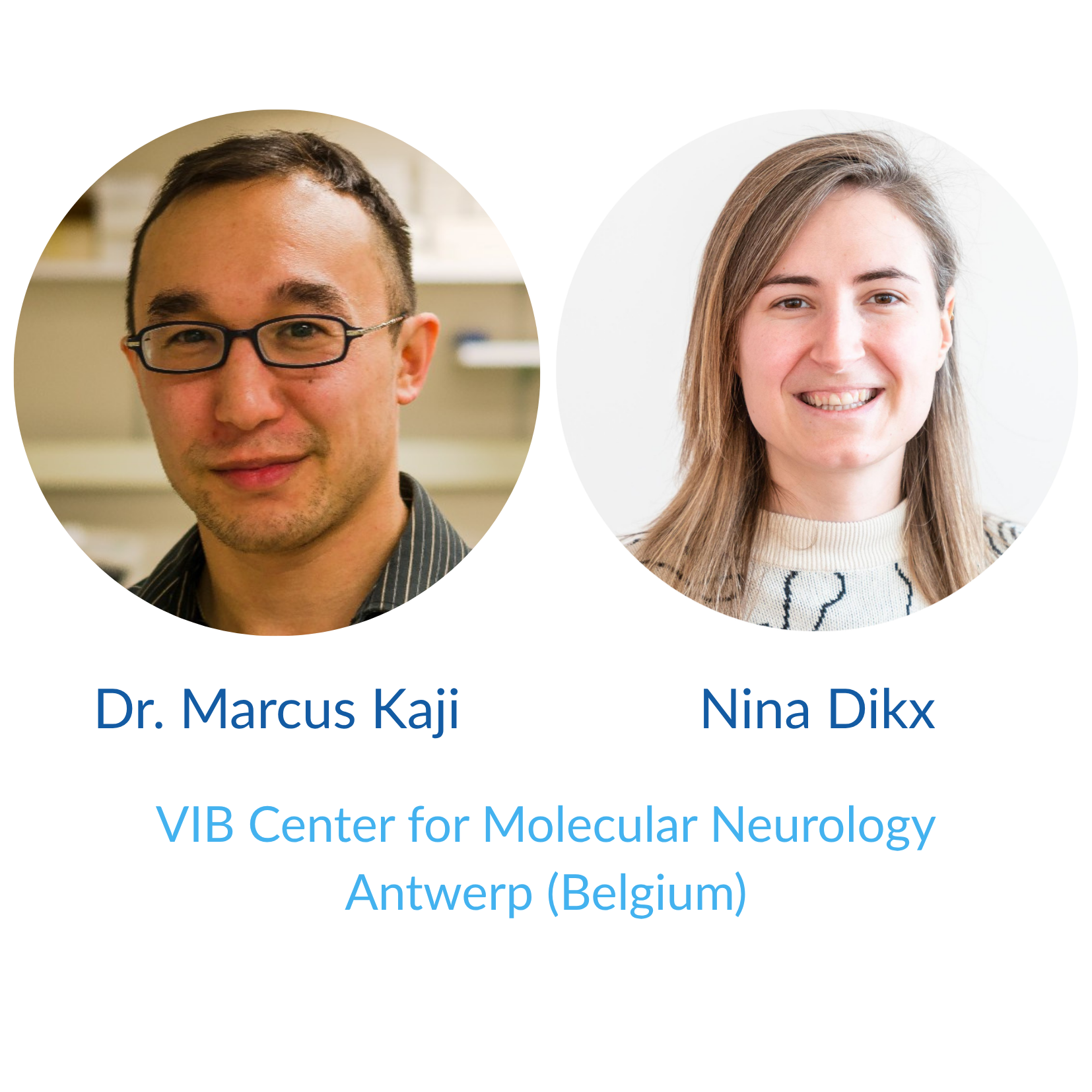
Two familiar faces from the epilepsy research community join us from Antwerp, Belgium: Marcus Kaji, postdoctoral researcher, and Nina Dirkx, senior PhD student, both working under the mentorship of Prof. Dr. Sarah Weckhuysen at the VIB Center for Molecular Neurology. Long-standing members of the MaxWell Biosystems community, known for their engaging and insightful talks at our events across the globe, Marcus and Nina are now seeing the fruits of years of dedicated work reach publication. Their research sits at the intersection of iPSC-based disease modeling, pharmacology, and translational neuroscience, with a shared mission: to bring better treatments closer to patients living with rare genetic epilepsies. We sat down with them to hear about the science, the tools that make it possible, and what comes next.
In this
conversation

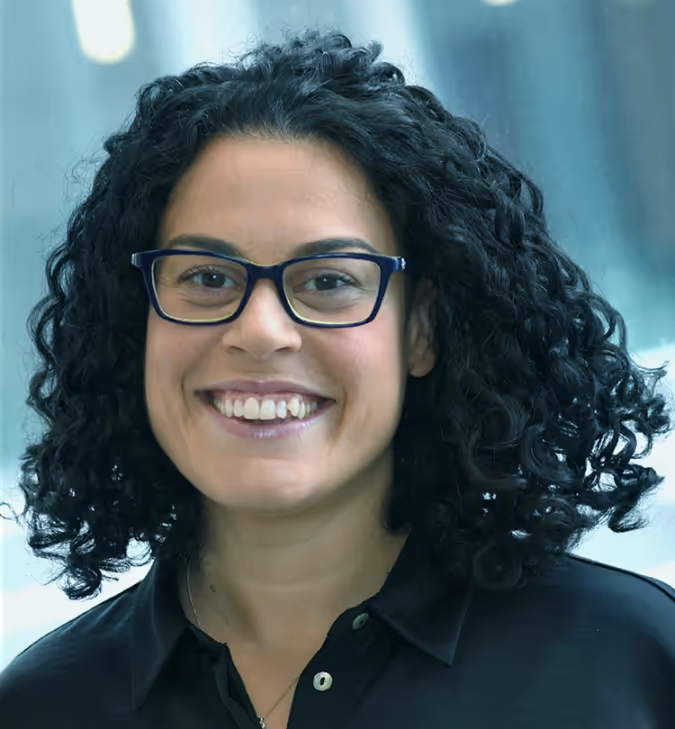
Laura
Congratulations! Several papers got accepted recently! Would you like to tell us more about it?
Nina and Marcus
In the past few years we’ve worked hard to develop patient derived iPSC neuronal models to aid in understanding disease mechanisms and for novel treatments of KCNQ2 disorders.
Our recent iScience paper grew out of a practical challenge we encountered when we started our first network recordings of our iPSC-derived neuronal models. When we were optimizing our MEA recordings, we also ran calcium imaging as a backup to monitor network activity. We quickly noticed that we barely saw spontaneous synchronized bursting in standard calcium dye-based imaging, while it was very consistent in MEA. Using the calcium imaging workflow on the MaxTwo system, we were struck by how strongly simple media changes altered network behavior. We then developed a simple protocol that preserved spontaneous network activity to generate biologically relevant, reproducible data from our iPSC models.
Our most recent paper in Brain represents the culmination of our work developing KCNQ2 disease-related iPSC-derived neuronal models and pipelines for functional characterization, identifying unique fingerprints of pathogenic KCNQ2 loss of function variants.
Our British Journal of Pharmacology paper showcases the advantages of HD-MEA for drug screening and characterization using biologically relevant human neuronal models. These are especially useful for our upcoming GOF characterization and therapeutic approaches, and inclusion of inhibitory neuron cultures.
Laura
These are such exciting milestones for you! Looking back, what first inspired you to pursue neuroscience, and how did that journey bring you to the Weckhuysen Lab?
Marcus
I chose neuroscience because “I like worms and I like drugs”. My PhD focused on parasitology, studying how to target the brains of worms with drugs, always with the goal of treating humans. Over time, my fascination shifted from the parasite to the human side. That’s when I began focusing on drugs that target the human nervous systems, especially in neurodevelopmental disorders. Parasites often affect very young children, so the link between these areas was always in the back of my mind.
Laura
Very interesting, how about you Nina?
Nina
I enjoy solving complex problems. During my studies, I became fascinated by neurobiology because the brain is arguably the most complex system there is. That curiosity led me to join a lab working on epilepsy in another group. When I later saw an open PhD position in the Weckhuysen Lab, knowing there was already a connection between the two labs, I decided to apply. I tend to dive deep into whatever topic I take on, so here we are!
Laura
Thank you so much for sharing your paths to the Weckhuysen Lab. How would you describe the focus of the lab?
Nina
Our lab focuses on two main areas: bioinformatics and genetics of epilepsy. Marcus and I are part of the team dedicated to induced pluripotent stem cell (iPSC)-based disease modeling, specifically studying KCNQ2 and KCNQ3 encephalopathy.
Marcus
We primarily use high-density microelectrode array (HD-MEA) recordings and advanced imaging techniques to study patient-derived iPSCs from individuals with developmental disorders, which we differentiate into neurons. With the HD-MEA, we track their developmental progress and identify clear phenotypes. Once we have these phenotypes, we test potential treatments - applying drugs to see if we can modulate neuronal activity, either under- or over-activating them, or influencing gene expression.
Nina
Our goal is to establish a reliable drug screening and testing platform that provides robust, meaningful readouts from our disease models. A big part of our work is also translational, aiming to bridge the gap between the lab and patients.
Laura
Did you had already these goals in mind when you decided to choose the MaxTwo System for your research in 2020?
Nina
Not exactly. When we began these projects, we had a close collaboration with Professor Nael Nadif Kasri (Donders Institute for Brain, Cognition and Behaviour, Radboud University Medical Centre, Netherlands), who was already well known in the MEA field. Our aim was to apply this technology to disease modeling, so we started looking for the best system available, and that’s how we found MaxWell Biosystems!
Laura
How does our HD-MEA technology help you achieve your research goals?
Nina
Since we use iPSC derived models of developmental disorders, I would say the biggest impact is being able to follow the neuronal development over time. The ease of using the MaxTwo System and the fact it generates so many data points are two incredible advantages. In one of our most recent paper in Brain, we observed striking phenotypes at very early stages of development which changed at a later maturation stage. Traditionally with other technologies, you only capture endpoint measurements and we would miss this dynamic phenotype, so having this continues view on your samples is a huge advantage! It not only improved our understanding of disease mechanisms, but also changed how we approach drug screening in iPSC-derived neuronal models, highlighting that the developmental stage of screening and the choice between acute and chronic treatment paradigms are critical experimental design considerations.
Marcus
With patch clamp, the most common alternative technique, you are limited to a narrow time window. You either observe a neuron spiking, or you don’t, categorizing it as active or inactive. HD-MEAs give us a much more holistic perspective. By using the MaxTwo System, we could identify patterns of activity and silence that could easily be misinterpreted otherwise.
Laura
Looking back to your early days with the system, which had a bigger impact on your studies — the number of parameters you could capture, or the way you were able to extract them?
Marcus
Honestly, both! The graphical user interface, combined with clear annotations, was a huge advantage compared to exporting a raw trace into MATLAB and figuring it all out manually. For someone like me, who was inexperienced in the MEA field at the time, this ease of use made a big difference!
Laura
True! I can absolutely relate to that. Talking about other tools, how have the 24-Well Plate and the Batch Analysis features helped you?
Nina
The Batch Analysis module is heaven on earth. It makes handling massive datasets feasible and has cut our workload at least twenty fold. Also feeding results directly into reports has streamlined our workflow, even for small projects, and the auto-generated PDF has been a huge boost for our quality control. It has truly been a lifesaver!
Marcus
In acute toxicity studies, the 24-Well Plates allow us to use less compound while increasing throughput, a big advantage, especially for novel compounds. Honestly, I couldn’t have run these experiments without the combination of higher throughput and batch analysis! And, if I can add more, in another project currently in response to reviewers, I’m studying a novel compound whose toxicity mechanism involves blocking synaptic transmission. With the AxonTracking Assay, we can capture electrical activity within a single cell and directly observe changes in signal propagation which were still present even in the absence of network-wide bursts. If we only looked at spiking or network analysis, we would have completely missed these unique and unexpected phenotypes.
.png)
Laura
If you could only keep one feature in your ideal MEA system, which would it be?
Nina
The Network Assay. The amount of information you can extract from it, especially with the exceptional resolution of the high density, is incredible compared to standard burst waveform analysis. You can capture activity both within and outside of the bursts, and that level of detail is invaluable for our work! In fact, the waveform resolution is also incredibly detailed, and this can help pinpoint what is happening downstream in the disease process or at the synaptic level.
Marcus
I agree. It also captures well the phenotypes we are most interested in. The gene and mutation we study cause either hyper- or hypoexcitability, and is involved in the duration of repetitive neuronal firing. Changes in network-wide repetitive firing manifests as longer or shorter network bursts which is something the Network Assay reveals beautifully.
Laura
You are true lovers of our Network Assay! Has the high density of our electrodes supported your work in other ways as well?
Marcus
The improved signal-to-noise ratio with high density is a huge advantage for drug screening. We can use lower drug concentrations to see effects across the entire chip, whereas low-density setups tend to show only an average effect, requiring higher doses. High density lets us detect the susceptibility of lower-firing neurons to compound silencing, which adds a new layer of insight. It gives us higher pharmacological resolution, which is invaluable for characterizing drug responses as well as potency and efficacy.
Nina
Looking ahead, we are in the process of studying co-cultures of inhibitory and excitatory neurons. I believe the HD-MEA is the only platform capable of accurately extracting and distinguishing the signals from each cell type.
Laura
Beyond the products, would you like to share any other thoughts about MaxWell?
Nina
Well, even during the process of looking for a system and interacting with different vendors, we already truly appreciated that our first point of contact at MaxWell was someone knowing the technology and its applications in and out. On top of that, it is always extremely easy to set up a call whenever we have problems or questions. Since the beginning, every scientific question we had has been addressed immediately or within a few weeks...
Marcus
…that is true! Most of the interactions I’ve had with members of the company feel like a collaboration between scientists, providing feedback on experimental design in some instances. In my case, I was used to two electrode voltage clamps, so I felt lost and scared at the beginning. However, the scientific guidance of the experts working at MaxWell together with the ease of use of the software really facilitated my journey with HD-MEA.
Laura
Thank you – that is so nice to hear! And, what do you think about our events?
Nina
If you ask around in our lab or even our professor about what is the most valuable meeting we attend, they will all answer the MxW Summit. The summit is an opportunity for experienced users and new users with the HD-MEA being a central part of their research to interact – this is extremely beneficial. In big conferences, there is only a limited number of experts you overlap with, and it is very difficult to meet them all to learn directly from them! Instead, at the Summit, we are all together, you can learn so much and get the exact help you need from so many experts - it’s amazing.
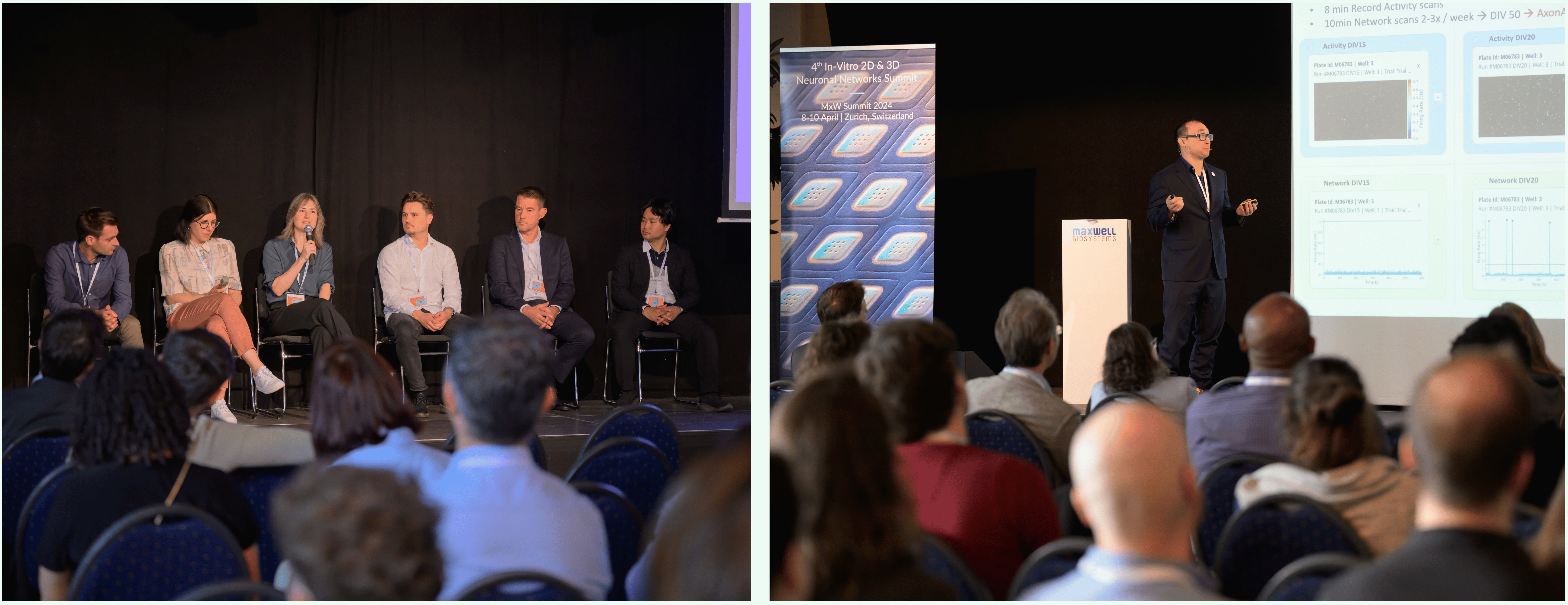
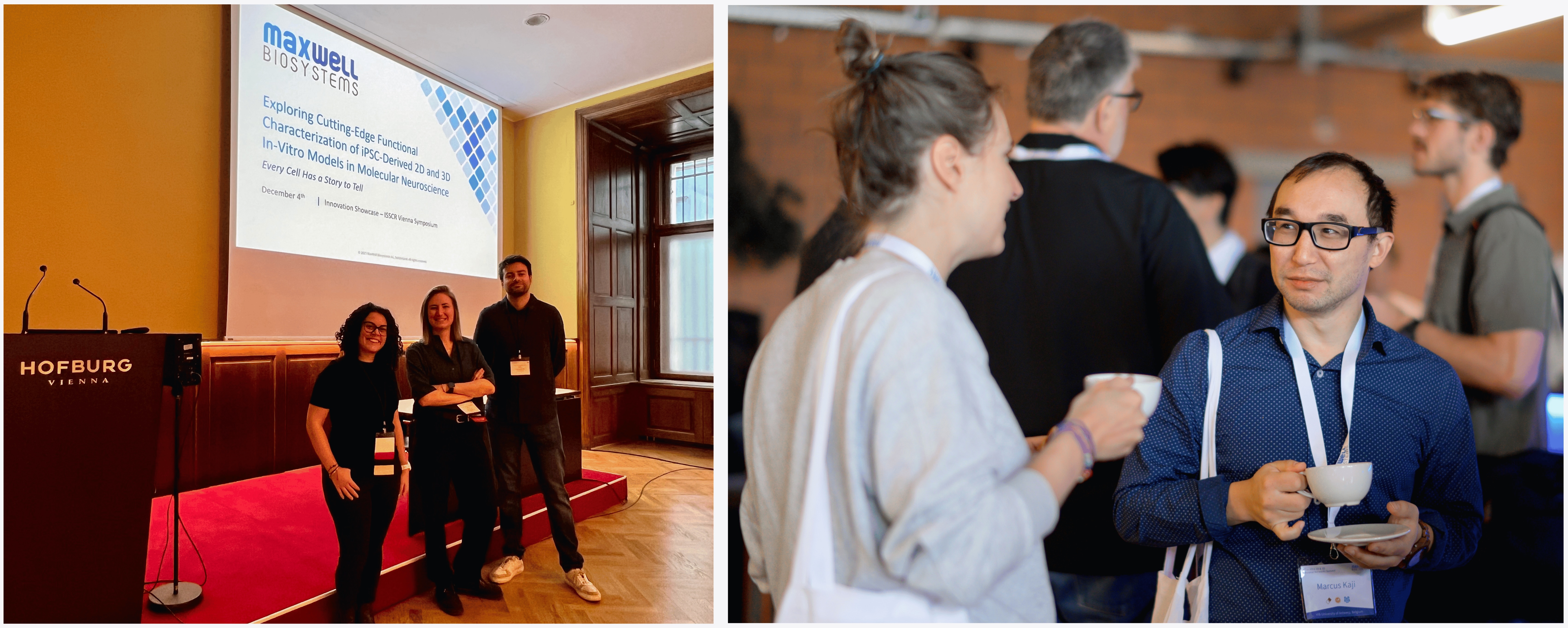
Right: Dr. Marcus Kaji presenting his research at the MaxWell Summit 2024.
Marcus
We also just recently co-hosted a HD-MEA event at the University of Antwerp with MaxWell Biosystems. It was a hybrid of scientific talks and interactive workshop, and it was an absolute blast! We had so much fun preparing for the meeting together and had incredible interactive participation from all the attendees. Would absolutely do it again!

Laura
Oh that is wonderful! We also enjoyed the MxW Workshop Antwerp 2026 a lot. The MxW Summit is returning in a few months with a new format as NeuMoS 2026 – you cannot miss it! Thank you both for taking the time to talk to us – until the next MEAsterpiece submission! 😊
Thank You
We extend our warmest thanks to Marcus and Nina for their time, their openness, and their infectious enthusiasm for the science. It is a genuine pleasure to watch their work mature from early experiments into published contributions that move the epilepsy field forward. We are also deeply grateful for their collaboration in organizing the MxW Workshop in Antwerp. We look forward to following the next chapter of the Weckhuysen Lab's journey, and of course, seeing them at NeuMoS 2026.
Discover More
Enjoyed this interview? Explore our 2026 focus stream on neurological disease modeling, featuring curated resources, expert insights, and practical examples of how advanced in vitro models and functional readouts can deepen our understanding of disease mechanisms.
Related Resources
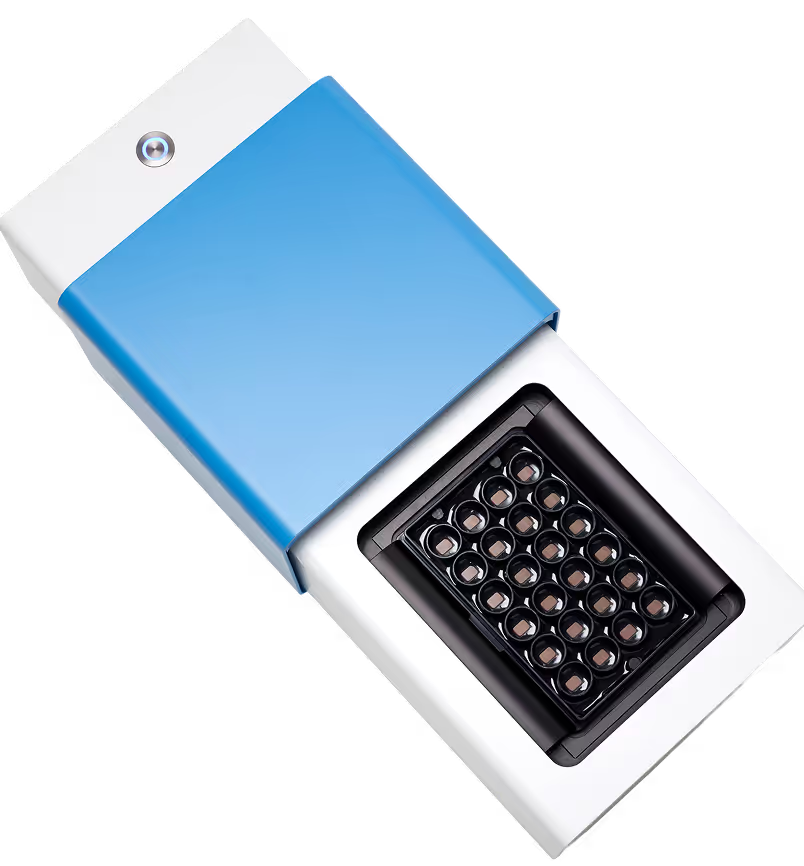
MaxTwo
Maximize your cell functional assays
MaxLab Live
All-in-one Software
Disease Modeling
Pharmacology & Toxicology
Unperturbed Dye-based Imaging of Spontaneous Synchronized Calcium Activity in iPSC-derived Neuronal Cultures
Kv7.2 loss-of-function causes early hyperexcitability and network remodelling
The fast-dissociating D2 antagonist antipsychotic JNJ-37822681 is a neuronal Kv7 channel opener: Potential repurposing for epilepsy treatment