MaxWell Biosystems Celebrates 10 Years of Advancing Neuroscience and Drug Discovery
From academic research to laboratories worldwide, the Swiss company marks a decade of innovation and collaboration in high-content electrophysiology.
Author
Date
ZURICH, Switzerland, September 25, 2026. MaxWell Biosystems, a global technology leader in high-content electrophysiology, marked its tenth anniversary with an Open House at its Zurich headquarters on September 18, 2026. Nearly 300 guests joined the celebration, bringing together the people who have helped build the company and the scientific community around it.
The company’s High-Density Microelectrode Array (HD-MEA) platforms record and map the electrical activity of living cells and enable targeted electrical stimulation. By capturing signals at subcellular, single-cell, and network levels, they help researchers understand neuronal function, investigate disease mechanisms, and study responses to potential treatments.
From research prototypes to tools used worldwide
MaxWell’s roots lie in microelectrode array research at ETH Zurich, led by Professors Henry Baltes and Andreas Hierlemann. Work at RIKEN in Japan gave members of the founding team a firsthand view of the potential of induced pluripotent stem cells (iPSC) and organoids. Researchers could now study human neurons and increasingly complex biological models in the laboratory, but needed better tools to understand their function.
Founded as an ETH Zurich spin-off in 2016, MaxWell set out to bring high-content electrophysiology from research prototypes into the hands of scientists worldwide. MaxOne launched in 2017, MaxTwo in 2019, and the MaxTwo 24-Well Plate in 2023, enabling users to scale their experiments while retaining detailed functional readouts.
Board member Beat Schillig, founder of IFJ and co-founder of Venturelab, first met the founding team when MaxOne was still taking shape. Even then, he recalled, their vision went far beyond a single product, and it was the team itself, with its enthusiasm and determination to turn ideas into reality, that convinced him to get involved.
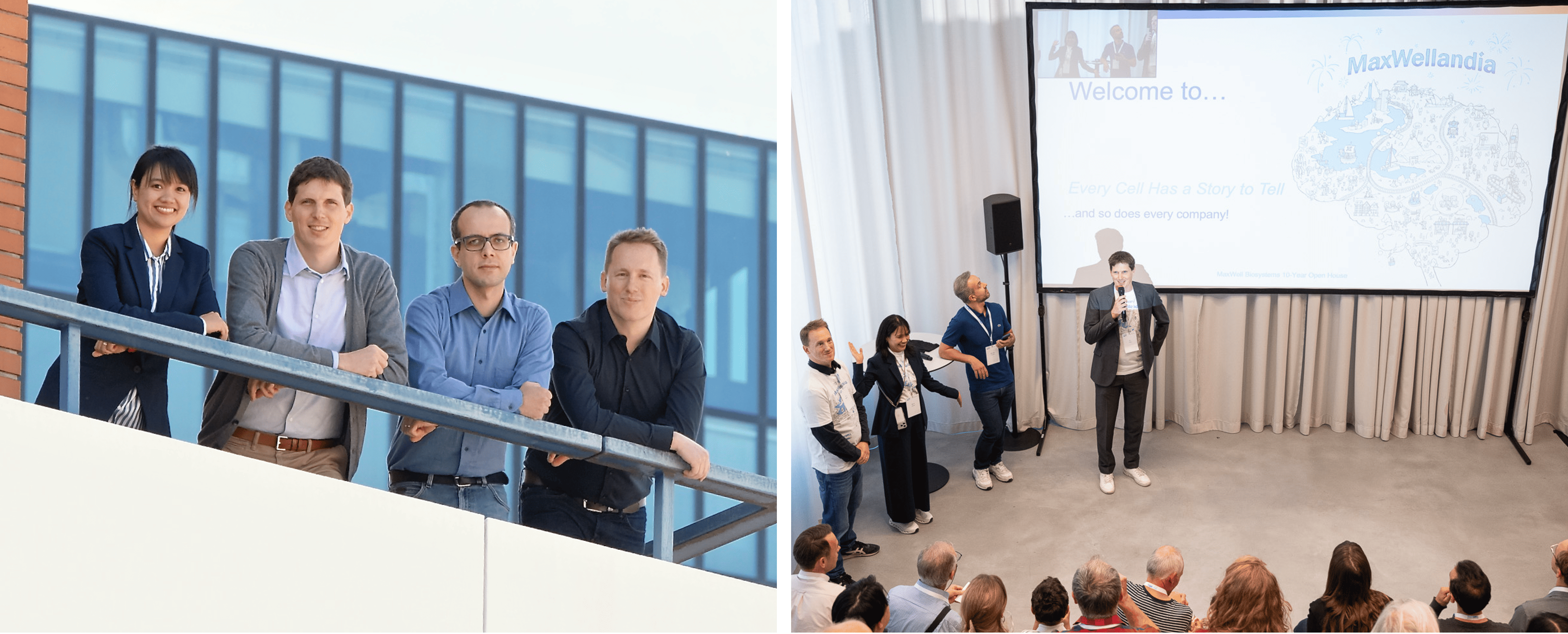
In the 2016 photo, from left: Dr. Marie Obien, Dr. Urs Frey, Dr. Michele Fiscella, and Dr. Jan Müller.
Global reach, close collaboration
To date, more than 400 MaxOne and MaxTwo systems have been installed in laboratories across some 30 countries. The company has grown to well over 50 employees, with headquarters in Zurich and a US subsidiary established in San Diego in 2025.
Its users include academic research groups, biotechnology and pharmaceutical companies, contract research organizations, and cell providers. Alongside its instruments and MaxLab Live software, MaxWell provides scientific support and opportunities for users to share knowledge and experience. Close collaboration with researchers remains central to how the company develops its technology.
“Behind every one of these HD-MEA systems is a research or drug discovery team that trusted us with their questions. Our users have helped shape MaxWell as much as we have, and growing this community, while staying close to each of them, is what matters most to me as we look ahead,” said Marie Obien, Chief Commercial Officer and co-founder of MaxWell Biosystems.
Celebrating the people behind MaxWell
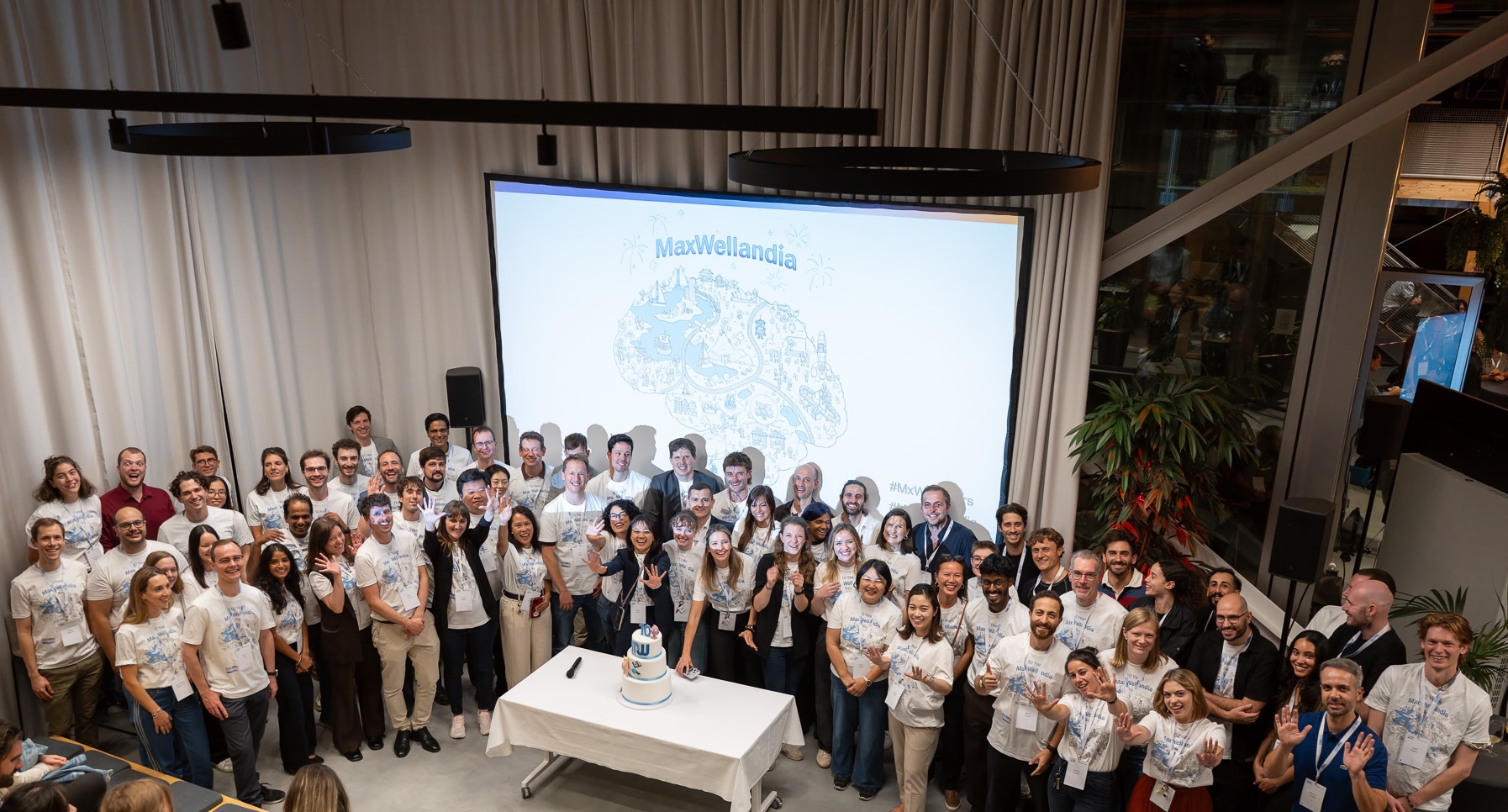
Held at the close of NeuMoS 2026, the 10-Year Open House brought together current and former employees, known as MaxWellers, with users, research collaborators, business partners, suppliers, shareholders, families, and friends. It was an opportunity to reconnect, share memories, and celebrate the contributions behind the company’s first decade.
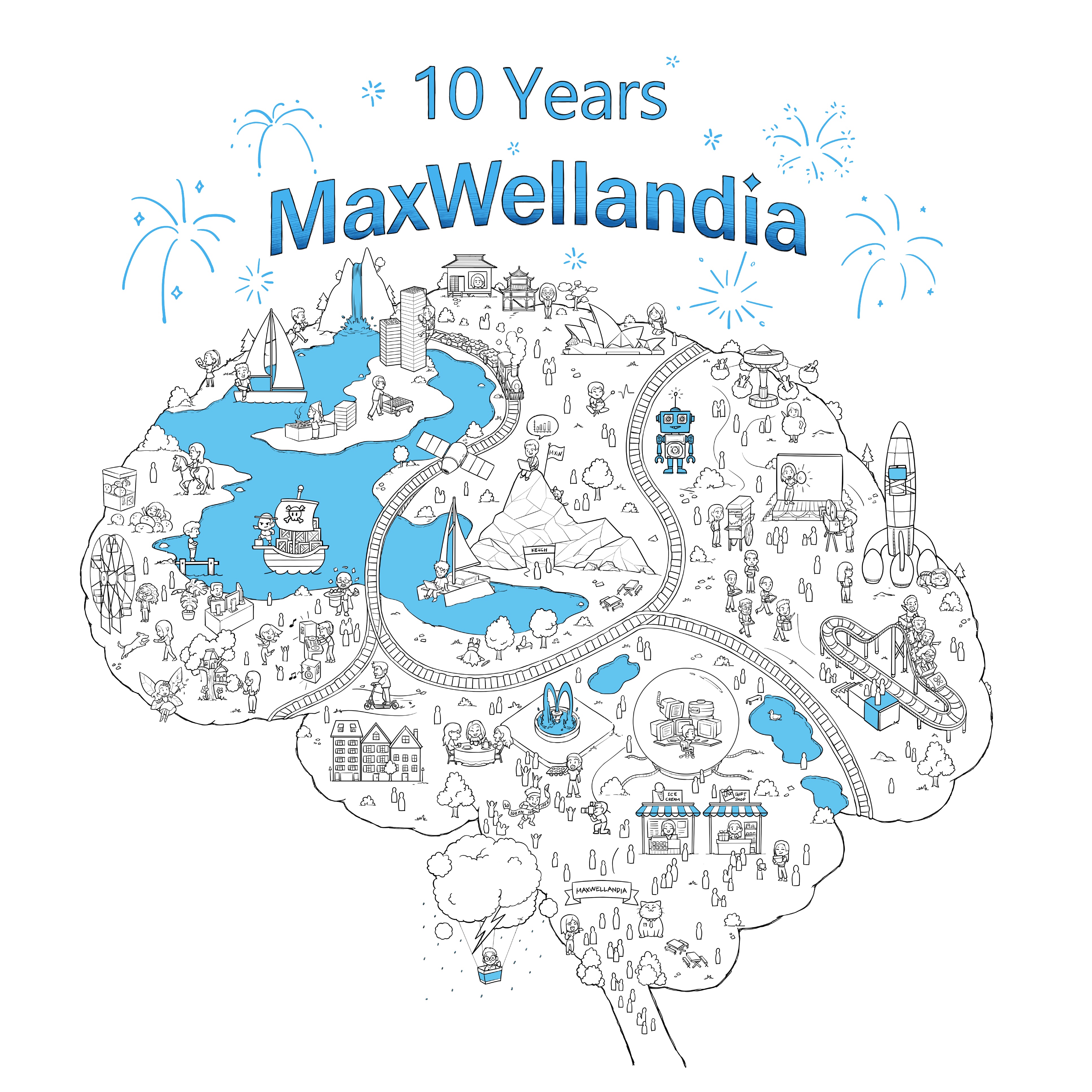
“Thank you to all MaxWellers, past and present, and to the families and friends who support them,” said Urs Frey, CEO and co-founder of MaxWell Biosystems. “To our users, collaborators, partners, shareholders, and suppliers: thank you for your trust and for challenging us to become better. You have all helped shape the MaxWellandia of today. This anniversary belongs to all of you.”
Schillig and fellow Board member Sadik Hafizovic, co-founder and former CEO of Zurich Instruments, sent video messages from their sailing boats: Schillig from the Mediterranean, and Hafizovic from the Bering Sea as he completed his voyage through the Northwest Passage. Hafizovic drew a parallel with the team: “When we worked through difficult situations on our voyage, we came out a better crew: sharper, calmer, harder to surprise, and more trusting of each other. That is what I see in MaxWell Biosystems after ten years. No ice can stop us.”
Looking ahead
MaxWell’s next chapter builds on the same goal: helping researchers obtain meaningful functional data from their biological models. The focus is on combining detailed recordings and analysis with scalable workflows, without losing the signal quality and flexibility needed to investigate complex neuronal systems.
The MaxTwo 24-Well Plate+ combines parallel recording with flexible electrical stimulation, while the upcoming 96-well format will expand experimental capacity. Integration with laboratory automation supports larger, more consistent workflows.
“Our ambition remains to give researchers deeper insight into how living cells function and to make that insight available at greater scale,” said Frey.
About MaxWell Biosystems
MaxWell Biosystems AG develops high-content electrophysiology platforms, software, and solutions for neuroscience, disease modeling, and drug discovery. Its MaxOne and MaxTwo systems help scientists record, stimulate, and analyze the electrical activity of living cells. The company is headquartered in Zurich, Switzerland, with a subsidiary in the United States.
Media contact
Dr. Ambra Villani, Scientific Communications Specialist ambra.villani@mxwbio.com | +41 44 244 24 65
Support ALS research: join our 10-year fundraising initiative
As part of NeuMoS 2026 and MaxWell Biosystems’ 10th anniversary celebrations, we launched a fundraising initiative to support ALS research. We are keeping the campaign open until September 2027, extending our anniversary celebrations into a year of giving.
Join us in supporting ALS research. Every contribution makes a difference!